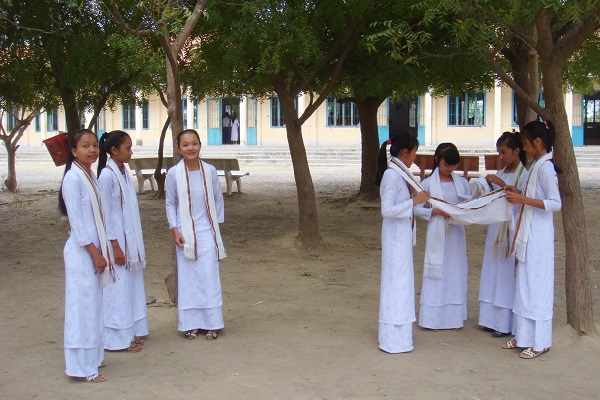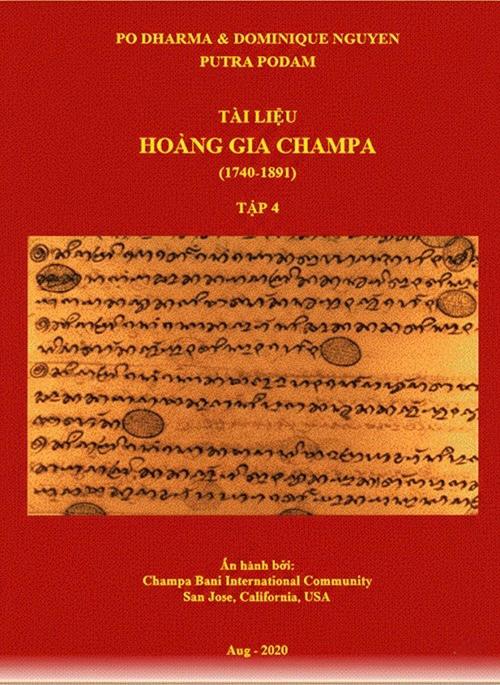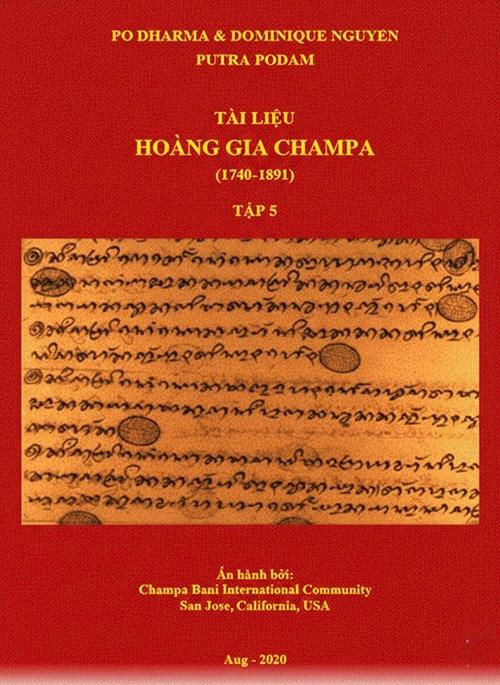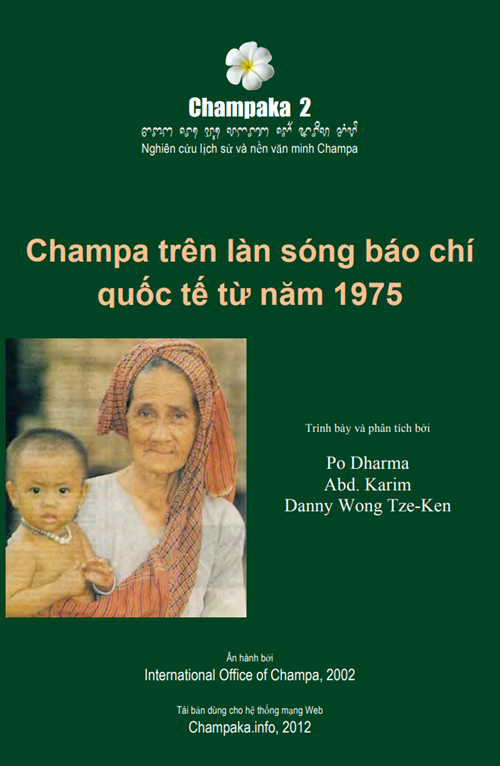

The term “Bani” originates from the Arabic word بني (banī), meaning “descendants,” “lineage,” “clan,” “community,” or “followers.” In Cham society, “Bani” was traditionally used to refer to the Muslim community, especially the Awal group, rather than the name of a separate religion. However, due to shifts in social perception and the distinction between “old Islam” and “new Islam” from the twentieth century onward, “Bani” gradually came to be misunderstood as the name of an independent religion. In reality, the traditional religious designations with historical legitimacy in Panduranga are Agama Awal and Agama Ahier.
1. Introduction
In recent years, the Cham community in the provinces of Ninh Thuận and Bình Thuận has witnessed a notable debate concerning proposals to recognize “Bani religion” as an independent religion. This issue is not merely administrative or legal in nature; it also reflects deeper misunderstandings regarding religious history, linguistics, and the system of identity classification within the Cham community itself.
According to the official classification of religions by the Vietnamese state, Cham people who follow Islam are categorized as Muslims. However, at certain times and in some local administrative contexts, particularly in Ninh Thuận and Bình Thuận, “Bani” has been recorded as a religious category on personal identification documents based on individual declarations. This inconsistency, combined with the lack of terminological standardization, has contributed to and reinforced the mistaken perception that “Bani” is a separate religion.
From an academic perspective, this phenomenon highlights the need to distinguish clearly between social terminology, linguistic expressions, and legitimate religious designations. Many terms within the Cham community originate from Arabic but have undergone semantic transformation under the influence of local culture. Without being analyzed within their specific historical and linguistic context, these terms are easily misunderstood or reinterpreted in ways that diverge from their original meaning.
The classic studies of Orientalist scholars such as Étienne Aymonier, Antoine Cabaton, and R. P. Durrand consistently classified religion in Champa into two main systems: Brahmanism and Islam. In these studies, the term “Bani” was never identified as a religion in itself; rather, it was used to refer to believers or followers of the faith, reflecting the terminology employed by the Cham community within the Islamic context of Champa.
Therefore, clarifying the meaning of the term “Bani” is not only of academic value but also of practical significance in standardizing public understanding, reducing long-standing misconceptions, and contributing to a more accurate definition of Cham religious identity in the modern context.
This study approaches the issue from three main perspectives. First, it analyzes the etymology of the term “Bani” in Arabic. Second, it compares the term with the writings of Orientalist scholars on Champa. Third, it examines how the term has been used in Cham religious practice and everyday language.
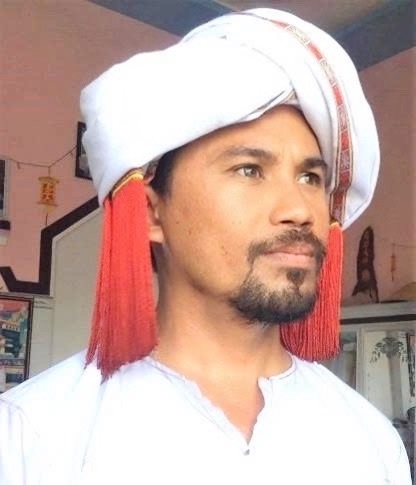
Figure 1. Katip Nguen (ꨊꨶꨮꩆ), an Acar priest of the Agama Awal tradition (early Islam, Champa Islam) at Magik (Masjid) Dik in Bình Thuận–Lâm Đồng.
2. The Etymology and Usage of the Term “Bani” in Arabic and Cham Society
The term “Bani” (بني) in Arabic derives from the root BNY (banā), a fundamental root in Semitic languages such as Arabic, Hebrew, and Aramaic. This root originally meant “to build” or “to construct,” but later expanded to include meanings related to “descendants,” “offspring,” “lineage,” and “clan.” Grammatically, “Bani” is the plural form associated with the noun “ibn” or “bin” (ابن / بن), meaning “son,” “son of,” or “belonging to the son of,” commonly used in iḍāfa (possessive) constructions to indicate kinship or a community sharing a common origin.
In Arabic, expressions such as “Bani Israel,” meaning “the descendants of Israel,” refer to the Jewish people in the Qur’an (Koran); “Bani Hashim” refers to the Hashim clan, the family of Prophet Muhammad; and “Bani Umayya” refers to the Umayya clan or the Umayyad Caliphate. These examples show that “Bani” functions as a social, genealogical, tribal, or communal designation for those who worship Allah, rather than as a religious term. It was a common form of identification in both pre-Islamic Arab society and throughout the Islamic period.
From an academic perspective, “Bani” must be clearly distinguished from other Arabic religious concepts such as “dīn” (دين), meaning religion or faith, and “islām” (إسلام), the proper name of the religion of Islam. “Bani” has never appeared within Islamic theological terminology as the name of a religion. This conclusion is supported by early twentieth-century Orientalist scholarship. R. P. Durrand noted in 1903 that “Bani” was a transliteration of “Beni,” meaning “the sons of…,” used to refer to a community sharing a common origin or belief, rather than a distinct doctrinal system or religion.
As Islam spread beyond the Arabian Peninsula, especially into Southeast Asia, the term “Bani” continued to be used in a broader sense to refer to communities of believers, groups sharing a faith, or people who were “religious” in a general sense. However, the essential nature of the term did not change: it remained a noun denoting a social, genealogical, and faith-based community, not a formal religious designation.
For the Cham communities of south-central Vietnam, the adoption of the term “Bani” did not mean the existence of a “Bani religion.” In Cham culture and religious practice, the term is understood as referring to people of faith, often associated with learning Arabic script and practicing the Qur’an. Modern anthropological and religious studies show that Cham Bani exists as a distinct localized cultural-religious form, deeply rooted in ritual, daily practice, and discourse. In the Cham context, the term “Bani” reflects a reconciliation between an Arabic-derived term and local social and religious realities, rather than the name of a doctrinal system.
In its broader usage among Cham communities and in Southeast Asia, “Bani” sometimes carries a meaning close to “believer” or “religious person.” In this sense, “Bani” may refer to those who worship Allah, especially within indigenous Muslim communities. Common expressions include “Bani Adam,” “Bani Nabi,” “Bani Ibrahim,” and “Bani Muhammad,” all referring to communities associated with a particular religious figure or origin. In Southeast Asia, expressions such as “Bani Java” are used to refer to Javanese Muslims, while “Cham Bani” or “Bani Cham” refers to Cham people who follow Awal traditions or Islam.
According to the writings of Étienne Aymonier and Antoine Cabaton, “Bani” or “Beni” in Arabic means “descendants,” “offspring,” or “the sons of.” In many cases, the term was used to refer broadly to Muslim communities, but it never carried the meaning of a separate religion.
In the Qur’an (Koran), the term “Bani” appears many times to refer to specific peoples or communities. One prominent example is “Ya Bani Israel” (يَا بَنِي إِسْرَائِيلَ), meaning “O Children of Israel” or “O descendants of Israel,” which appears in Qur'an, Surah Al-Baqarah, verse 40. This demonstrates that “Bani” is a term referring to an ethnic group, lineage, or faith community, rather than the name of a religion.
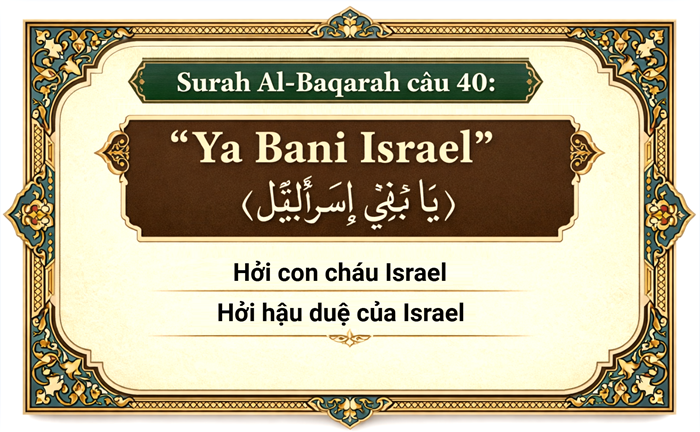
Figure 2. The phrase “Ya Bani Israel” (يَا بَنِي إِسْرَائِيلَ), meaning “O Children of Israel” or “O descendants of Israel,” appears in Surah Al-Baqarah, verse 40 of the Qur’an. Photo: Putra Podam.
Based on linguistic, historical, and anthropological analysis, it can be affirmed that “Bani” is not the name of a religion in Arabic, does not appear within the system of Islamic theological concepts, and has never been used as a religious designation in any Islamic tradition. Within Cham society, “Bani” refers to a group of believers or people of faith. Although localized in meaning, it retains its original character as a social, genealogical, and faith-related noun rather than a religious title.
Therefore, interpreting “Bani” as a separate religion is inaccurate both etymologically and in terms of historical and cultural reality. This misunderstanding should be reconsidered in Cham studies, Islamic studies, and linguistics through a more rigorous academic approach.
3. “Bani” in the Context of Islam and Southeast Asia
The spread of Islam from the Arabian Peninsula into Southeast Asia from around the tenth century onward, especially between the thirteenth and sixteenth centuries, was not only a process of religious expansion but also one of linguistic transfer, through which Arabic terminology entered local languages. During this process, many concepts were adopted, transformed, and reinterpreted to fit local cultural and social contexts. The term “Bani” is a representative example of this phenomenon.
In regions such as Malaysia, Indonesia, and Champa, Islam was not adopted in a uniform manner but passed through different stages of development. Studies of Southeast Asian Islam, particularly the work of Rie Nakamura, show that indigenous Muslim communities often maintained a hybrid vocabulary combining Arabic and local languages. Within this system, the original meanings of words were preserved while also being expanded according to social practice.
In this context, the term “Bani” was no longer limited to the meaning of “lineage” as in classical Arabic, but came to be used with several broader meanings. First, “Bani” could refer to a Muslim community within a specific social space. At the same time, the word was also used to refer to those who believed in Allah, that is, Muslim believers. In some cases, “Bani” could even refer to new members of a religious community, emphasizing the idea of conversion. However, it is important to note that this semantic expansion was social and ethnographic in nature, rather than the creation of a new theological concept.
In Cham society, this broader use of the term “Bani” became widespread and systematic. Expressions such as:
- Bani Cham: referring to Cham Muslims;
- Bani Jawa: referring to Javanese Muslims; and
- Anak Bani: (in Cham: nứ nì), meaning “children of believers,” referring to people born into the Muslim community,
all clearly demonstrate the role of “Bani” as a religious marker.
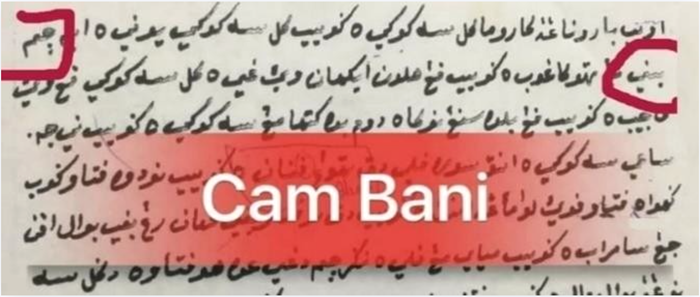
Figure 3. In the old Jawi manuscript Ariya Sah Kukei of the Cham community in Châu Đốc (Cham Islam in southern Vietnam), the authors refer to themselves as "چم بني" (Cam Bani), meaning Cham followers of the faith, or Cham Muslims. Photo: Collected source.
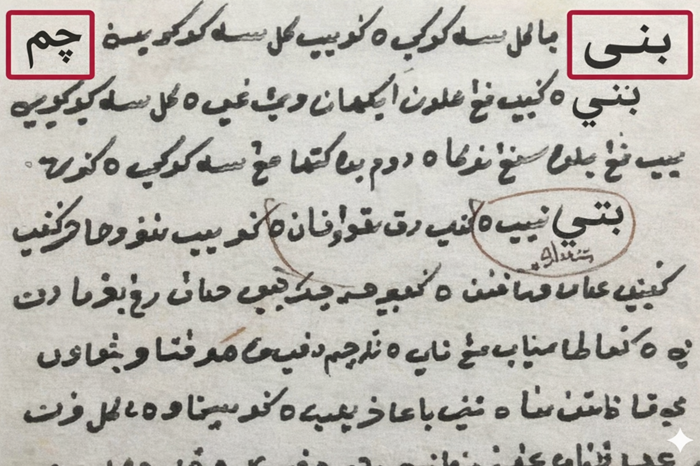
Figure 4. Explanation of the two words marked in red in Figure 3, from the old Jawi manuscript Ariya Sah Kukei of the Châu Đốc Cham community, where "چم بني" (Cam Bani) means Cham followers of the faith, or Cham Muslims. Photo: Collected source.
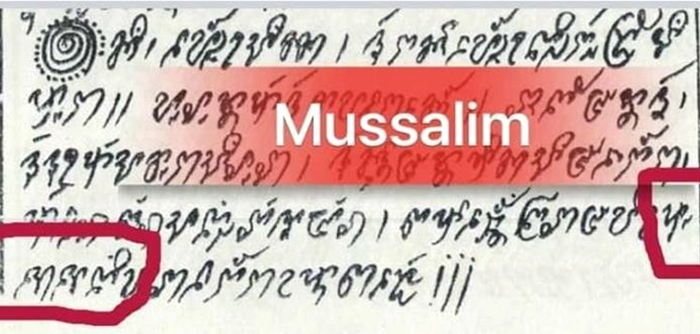
Figure 5. In Akhar Thrah Cham, the term "ꨟꨭꩋꨦꨤꨪꩌ" (Mussalim - Muslim) is used to refer to “Cam Bani,” meaning those who follow Islam. Photo: Collected source.
This phenomenon parallels usage in the Arab world. However, in the Southeast Asian context, the element of religious faith became increasingly prominent, giving “Bani” a meaning closes to “believer” or “follower.” Nevertheless, from a linguistic perspective, the term does not replace standard concepts such as “Muslim” or “Islam.”
Related forms such as “Bin” (ابن) in names, for example “Muhammad bin Abdullah,” belong to the same semantic system as “Bani,” both carrying the meaning of “son of.” This reflects a consistent conceptual structure in Arabic, where kinship and communal identity are expressed through the same vocabulary system.
From the perspective of ethnography and religious history, the Cham use of “Bani” to identify their Muslim community emerged through the process of adopting Islam, during which Arabic terminology was integrated into the local cultural system without altering the core religious essence. This observation is consistent with the view of Antoine Cabaton, who described the Cham Muslim community as a distinctive form of Champa Islam.
Based on the above analysis, it can be concluded that in the Southeast Asian context, “Bani” is a term with an expanded meaning that reflects communities of believers within local society. However, in essence, “Bani” still functions only as a designation for a community of believers rather than as a doctrinal system or an independent religion. Therefore, interpreting “Bani” as a separate religion is incorrect and arises from semantic transformation within a specific historical and social context.
4. Cham Bani in the Observations of French Scholars
In Orientalist studies of the late nineteenth and early twentieth centuries, French scholars held a relatively consistent view regarding the place of “Bani” within Cham religious life. In his work Les Tchames et leurs religions (“The Cham and Their Religions,” 1891), Étienne Aymonier identified two main religious systems within Cham society: Brahmanism, associated with Hindu traditions, and Islam, referring to the Cham Muslim community. According to Aymonier, the term “Bani” still fell within the category of Mahometanism and differed only in custom and social structure. This classification was systematic and consistent, reflecting the dominant academic view among French Orientalist scholars at the end of the nineteenth century.
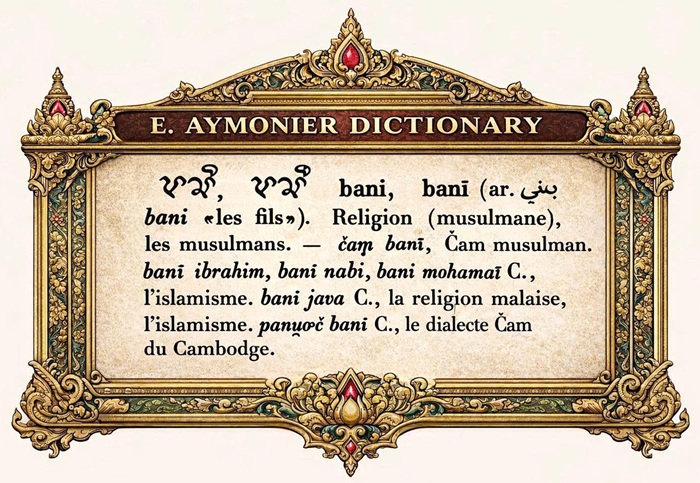
Figure 6. The word “Bani” (ꨝꨗꨪ, ꨝꨗꨫ) and its meaning in the Cham-French dictionary by E. Aymonier and A. Cabaton. Paris, MDCCCCVI = 1906, page 323. Photo: Putra Podam.
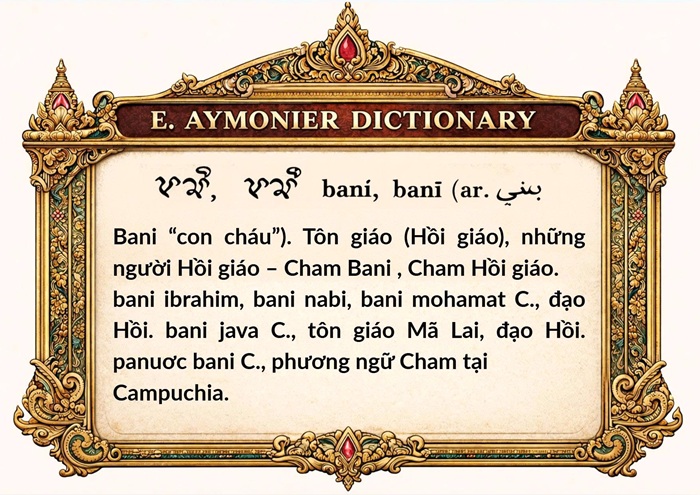
Figure 7. The word “Bani” (ꨝꨗꨪ, ꨝꨗꨫ) and its meaning in the Cham-French dictionary by E. Aymonier and A. Cabaton. Paris, MDCCCCVI = 1906. Translation of the content shown in Figure 5 into Vietnamese. Photo: Putra Podam.
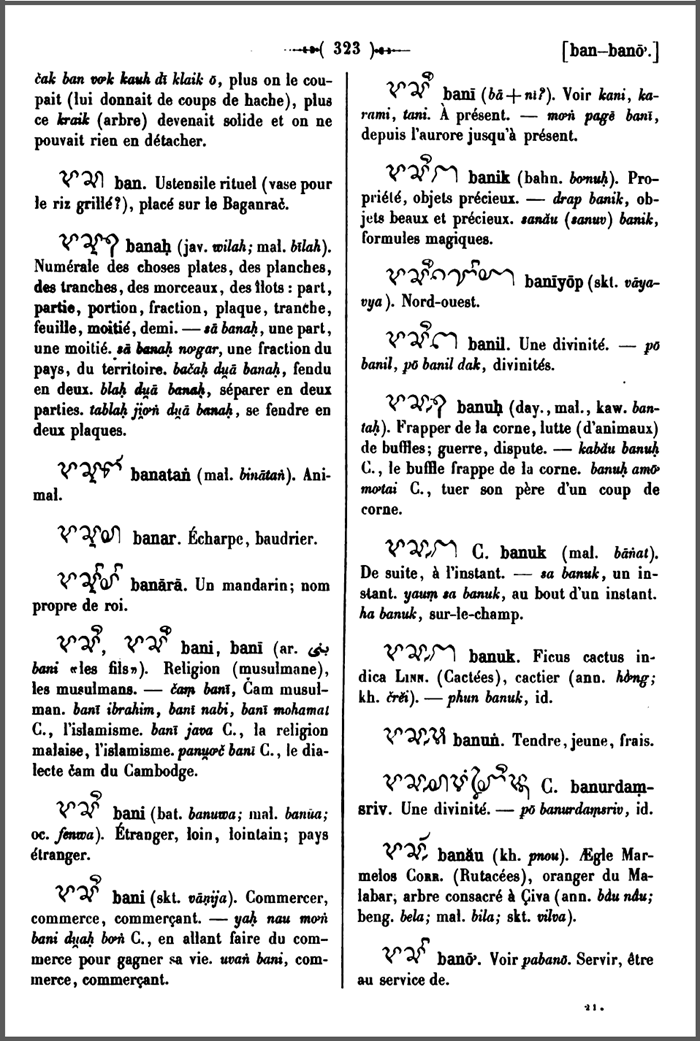
Figure 8. The original entry for the word “Bani” (ꨝꨗꨪ, ꨝꨗꨫ) and its meaning in the Cham–French dictionary by E. Aymonier and A. Cabaton. Paris, MDCCCCVI = 1906, page 323. Photo: Putra Podam.
Antoine Cabaton, in Les Chams (1901), continued this line of interpretation. He likewise affirmed that the Cham possessed only two principal religious systems: Brahmanism and Islam. Cabaton did not use “Bani” as a religious designation, but instead employed expressions such as “Chams musulmans” to refer to Cham Muslim groups in Champa. According to Cabaton, the groups now commonly referred to as “Bani” still belonged to Islam, differing only in the extent of their integration with local culture, ritual practice, and priestly organization.
In Notes sur les Chams (“Notes on the Cham,” 1903), R. P. Durrand clarified the issue further from a linguistic perspective. Durrand explained that “Bani” or “Beni” was an Arabic-derived term meaning “the sons of,” “lineage,” or “descendants.” It was a term referring to community, kinship, or common origin, and carried no religious meaning in itself. Its use within Cham society therefore simply reflected a way of referring to a group or community following Islam, rather than the name of a distinct religion. Durrand’s analysis is particularly important because it demonstrates that, even at the level of Arabic etymology, “Bani” was never originally a religious designation.
Taken together, the views of Aymonier, Cabaton, and Durrand reveal a clear consistency within French academic scholarship: the Cham possessed only two major religious traditions, Brahmanism and Islam; the groups commonly referred to as “Bani” still belonged within the sphere of Islam; and “Bani” was merely a communal, genealogical, or internal designation rather than the name of a religion. This indicates that interpreting “Bani” as the name of a religion lacks a solid basis in both early scholarship and original etymology.
5. “Bani” in Cham Religious Practice
In addition to linguistic evidence and Orientalist scholarship, ritual practice in Cham religious life provides direct evidence for how the term “Bani” has been understood.
One representative ritual is khitān (ختان), or circumcision, which is widely practiced throughout the Muslim world and is associated with entry into the community of believers. Although khitān is not one of the Five Pillars of Islam, it is widely performed as a sign confirming membership in the Muslim community and does not belong to any religion or independent sect outside Islam.
Within Cham communities, this ritual is known by local linguistic variants such as Katan, Khatan, or Khotan, depending on the region, including Ninh Thuận, Bình Thuận, and southern Vietnam. In traditional Cham usage, people employ the expression:
- “Ngak khatan tama Bani” (ꨊꩀ ꨇꨓꩆ ꨓꨟ ꨝꨗꨫ), meaning “to perform the circumcision ritual in order to enter the faith” or “to become a member of the Bani community.”
Importantly, there is no equivalent expression such as “tama Islam” in Cham ritual language to indicate joining Islam. Instead, Cham people use the phrase “tama Bani” as a way of expressing “entering the faith,” emphasizing the act of becoming a believer within the Muslim community.
Another example from Cham religious language is the phrase:
- “Bac akhar Bani” (ꨝꩄ ꨀꨇꩉ ꨝꨗꨫ), used by the Cham of Châu Đốc and Cham Muslim communities in southern Vietnam to mean “learning letters,” specifically learning Arabic script or studying the Qur’an. In this context, “bac” means “to study,” while “akhar Bani” refers to the Arabic writing system used in religious texts and rituals.
Cham communities in southern Vietnam, both historically and today, continue to use the expression “Bac akhar Bani” to refer to learning Arabic, studying the Qur’an, and learning Islamic religious teachings. What is particularly significant is that they clearly distinguish this expression by using “akhar Bani” instead of “Arabic script” or “akhar Islam.” This demonstrates that in Cham language, “Bani” does not simply mean “believer” or “Muslim community,” but has also been extended to refer to elements associated with Islamic life such as scripture, writing, and religious education.
From the ritual phrase “Ngak khatan tama Bani” and the use of “Bac akhar Bani” in the Cham context, several important conclusions can be drawn:
- “Bani” is used as a term for the community of believers in linguistic practice, especially in rituals marking entry into the faith.
- “Bani” can also carry the meaning of “religion” or “faith,” but not in the sense of a separate “Bani religion,” because the ritual content, objects of worship, and theological system all remain part of Islam.
- The phrase “Bac akhar Bani” shows that “Bani” is used not only to refer to the community of believers, but also to broader elements associated with Islamic life, including writing, scripture, and religious education. Among Cham communities in southern Vietnam, “akhar Bani” is the familiar term for the Arabic script used in the Qur’an and in ritual practice, rather than “Arabic script” or “akhar Islam.”
- The use of “Bac akhar Bani” by the Cham of Châu Đốc and Cham Muslim communities in southern Vietnam to refer to learning Arabic and studying the Qur’an indicates that “Bani” in Cham language is closely associated with Islam rather than being the name of a separate religion.
- In Cham religious practice, “Bani” is a social expression that emphasizes membership within the community, rather than a theological category.
- Misunderstanding the term as the designation of an independent religion results from separating language from its specific ritual and cultural context.
Cham ritual practice demonstrates that “Bani” is a way of expressing the Cham community as followers of the faith, specifically followers of Islam.
6. Religious Designations in the Panduranga-Champa Tradition
Throughout the history and culture of Champa, the religious classification system of the Cham people and the subjects of Champa was recorded clearly and consistently. Before the fifteenth century, two main religious systems existed in Champa: Brahmanism (Balamon), associated with Hindu traditions, and Mahometanism (Islam), referring to the Cham Muslim community.
After the fifteenth century, Islam in Panduranga developed strongly, especially through its close relationship with Malay Islam in Kelantan. Kelantan was regarded as one of the most important centers for the transmission of Islam to the Cham after the sixteenth century. King Po Rome, also known by the full name Nik Mustafa bin Wan Abul Muzaffar Waliyullah and holding the royal title Sultan Abdul Hamid Shah, is said to have studied in Kelantan before ascending the throne. There, he encountered Islam, Malay culture, and several locally influenced religious practices.
After returning to Champa, Po Rome introduced many elements of Malay Islam into Cham society, helping to shape a distinctive Islamic model in Panduranga. During this period, religious teachers, merchants, and marriage relations between Champa and Kelantan also contributed to the formation of a maritime Islamic network linking Champa with the wider Malay world.
Based on inscriptions, ethnographic studies, and the writings of Orientalist scholars, the Cham community in Panduranga developed two major religious systems, reflecting the evolution of religion within Cham society:
1. Agama Awal (ꨀꨈꨟ ꨀꨥꩊ): commonly described as “early Islam” or “initial-stage Islam” This was a form of Islam that had not yet become fully standardized, similar to early Muslim communities in Southeast Asia such as those in Patani and Kelantan. This system emphasized monotheism and the worship of Allah alone, while organizing religious life around ritual and local tradition, including the oral transmission of the Qur’an. Acar priests conducted rituals directly at mosques, especially during Ramadan (Ramawan).
2. Agama Ahier “Akhir” (ꨀꨈꨟ ꨀꨨꨳꨮꩉ): commonly described as “later Islam.” This system reflects a greater degree of adaptation to local culture and was influenced by Hinduism and traditional Cham customs. Although it still recognizes Allah as the supreme deity, it also preserves reverence for Cham deities, heroes, and cultural symbols.
The Relationship Between Awal and Ahier
Some earlier interpretations suggested that Awal and Ahier were two mutually syncretic systems, in which Awal worshipped the deities of Ahier and Ahier worshipped the deities of Awal. However, this understanding is inaccurate. In Panduranga, both Agama Awal and Agama Ahier recognize Allah as the supreme deity, but each fulfills different functions within religious life.
This division of roles is clearly reflected in the position of the Acar priesthood. In rituals involving prayer directed to Allah, such as prayers for health, well-being, or the Rija ritual, Ahier followers often invite Acar priests from Agama Awal to perform the ceremony. Conversely, Acar priests do not participate in rituals devoted to Cham deities. When visiting Cham temple-towers, they remain outside and do not perform Hindu rituals. At the same time, Ahier followers may still participate in prayers at Awal mosques, especially during Ramadan (Ramawan).
Therefore, Agama Awal should not be understood as a syncretic system with Agama Ahier in the sense of a mixed religion. Rather, it is a form of Islam that occupies the central role in rituals directed toward Allah. The two systems coexist within a broader religious structure, reflecting different stages of development and adaptation of Islam in Cham society.
By contrast, the term “Bani” does not appear within the traditional religious classification system of Panduranga-Champa. There has never been a term such as “Agama Bani” in Cham history or religion, nor has there ever been a “Bani religion” in Cham texts, rituals, or academic records. Instead, “Bani” appears only in later social, ritual, and communal contexts, with the following functions:
- A social designation used to refer to a group of people sharing the same religious practice.
- A term used by believers, as in “Ngak khatan tama Bani,” meaning to perform circumcision in order to join the community of believers.
- A reference to the Muslim community, emphasizing the Islamic character of Cham religious life.
“Bani” is not the name of a religion, but rather a label for a community following a new faith, distinguishing Cham Muslims from other groups. It is comparable to the Vietnamese expression “xóm đạo,” which refers to a Catholic neighborhood without implying the existence of a separate religion.
Several key conclusions may be drawn:
- The designation “Agama Awal” accurately reflects the religious nature of Cham Islam.
- Any interpretation of “Bani” as the name of a religion is incorrect from both a linguistic and historical perspective within Champa.
- “Bani” is simply a label for Muslim believers in Champa and has no value as an academic religious classification.
This conclusion is especially important today, as some Cham communities in Ninh Thuận, Bình Thuận, and other regions continue to misunderstand the term “Bani,” leading to demands for recognition of a so-called “Bani religion” without historical or academic foundation.
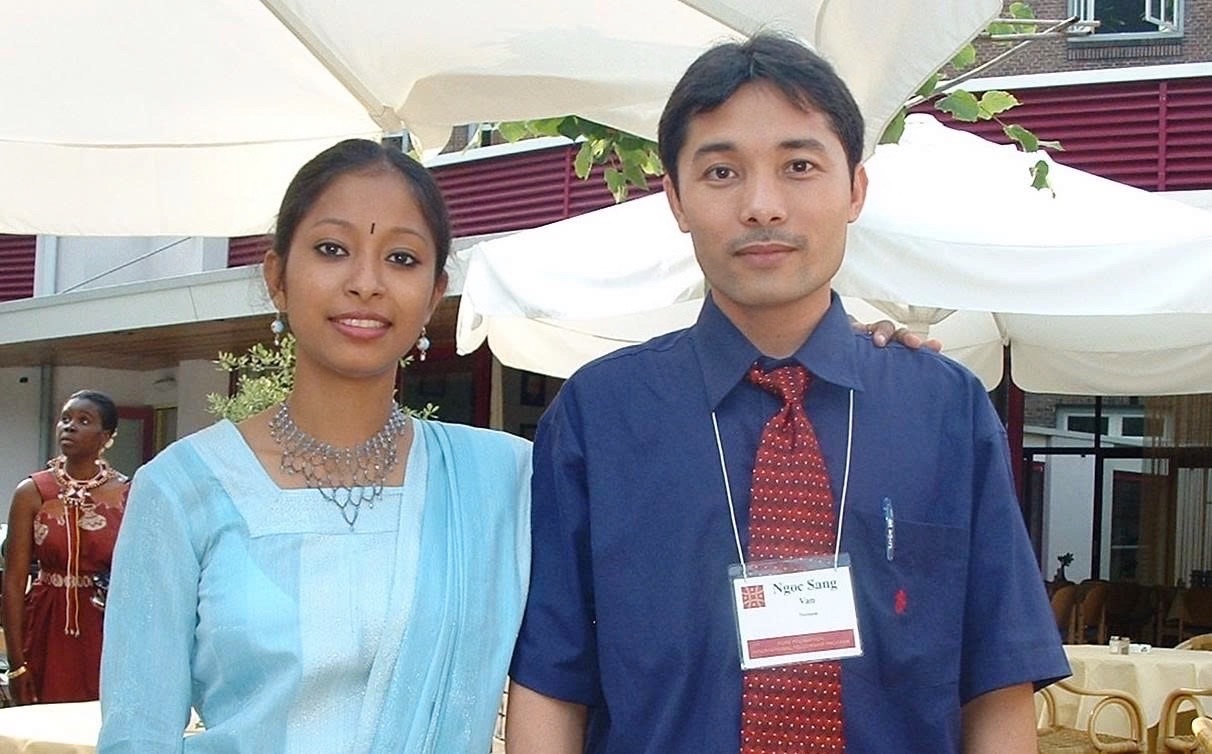
Figure 9. A Cham Ahier young woman (Cham influenced by indigenous culture and Indian culture) and a Cham Awal young man (Cham Islam – early Islam, still influenced by indigenous Champa culture). Both Cham Awal and Cham Ahier worship Allah as the supreme deity. Photo: Putra Podam.
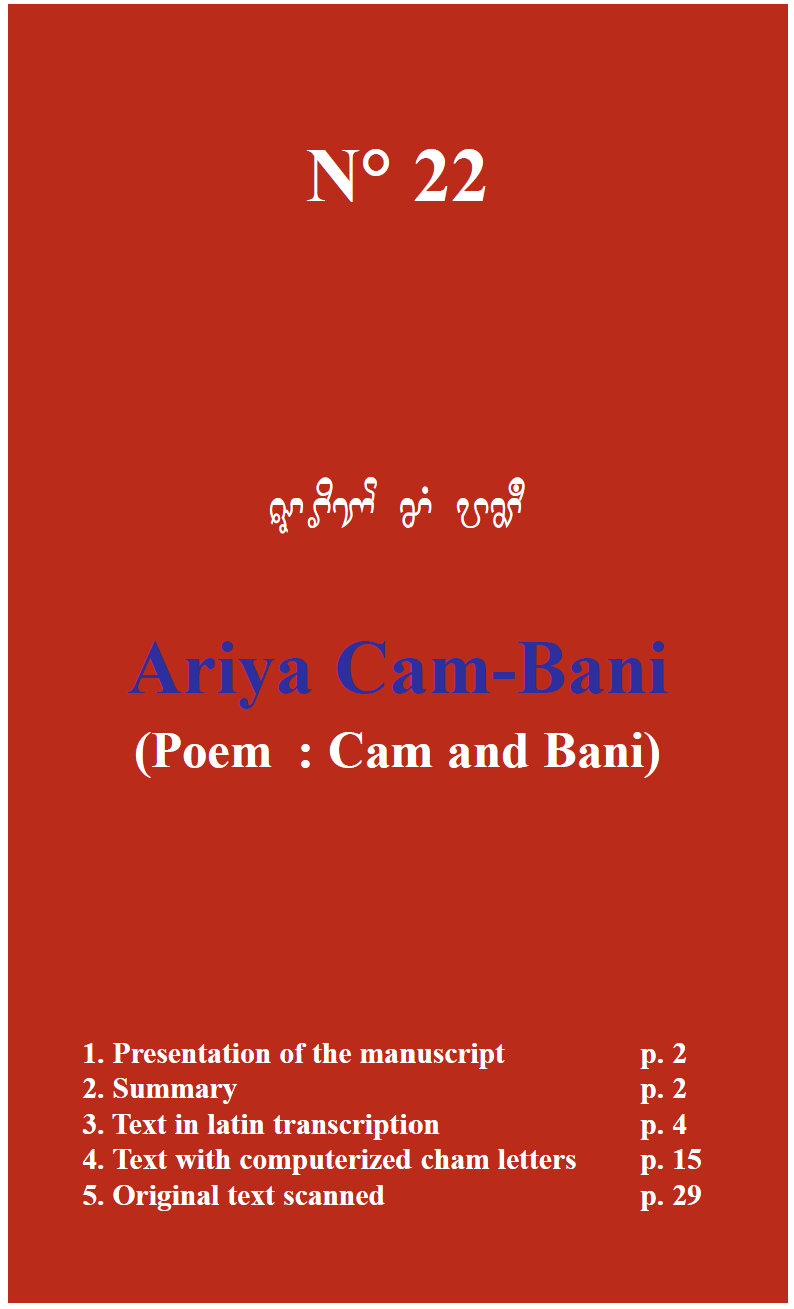
Figure 10. The work Ariya Cam - Bani (Poem: Cam and Bani), currently preserved at the École Française d’Extrême-Orient, is a famous Cham tragic epic written in ancient Cham script (Akhar Thrah) on palm leaves or traditional paper manuscripts. The work is believed to have been composed after the era of Po Rome (Nik Mustafa), around the eighteenth to nineteenth centuries, and tells the tragic love story between a Bani (Muslim) young man and a Cham Ahier young woman. The work is catalogued as No. 22, edited by Po Dharma, and published by the Department of Museums and Antiquities Malaysia in collaboration with the École Française d’Extrême-Orient in Kuala Lumpur in 2003..
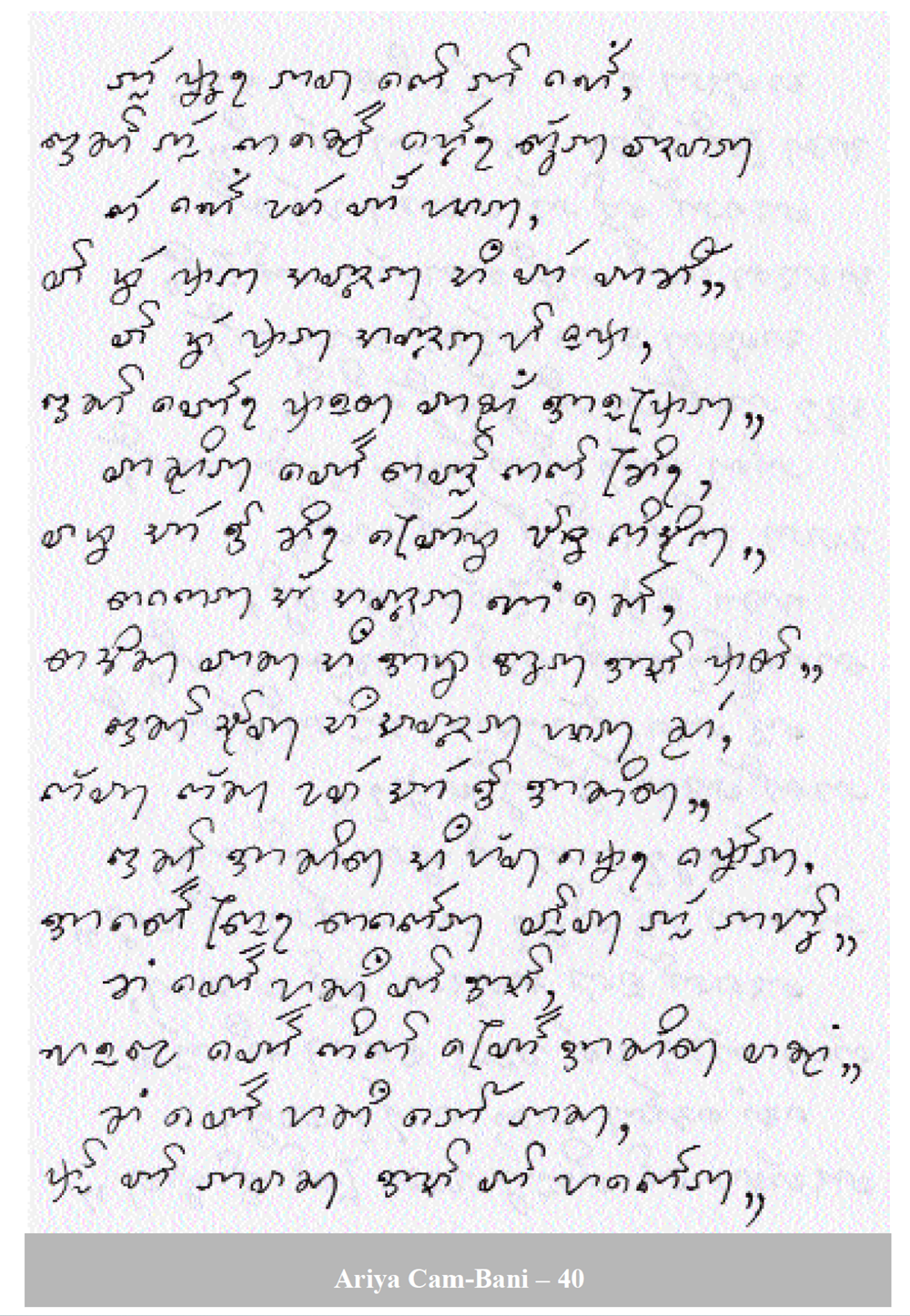
The last four sentences in the text above:
"Cam saong Bani sa aia,
sa-ai saong gila, praong anit ra-nam,,
Cam saong Bani ké kan,
mu sa karan, aia sa balaok,, ".
Figure 11. Ariya Cam - Bani (Akhar Thrah version), currently preserved at the École Française d’Extrême-Orient. The work is believed to have been composed after the era of Po Rome (Nik Mustafa), around the eighteenth to nineteenth centuries, and tells the tragic love story between a Bani (Muslim) young man and a Cham Ahier young woman. The work is catalogued as No. 22, edited by Po Dharma, and published by the Department of Museums and Antiquities Malaysia in collaboration with the École Française d’Extrême-Orient in Kuala Lumpur in 2003.
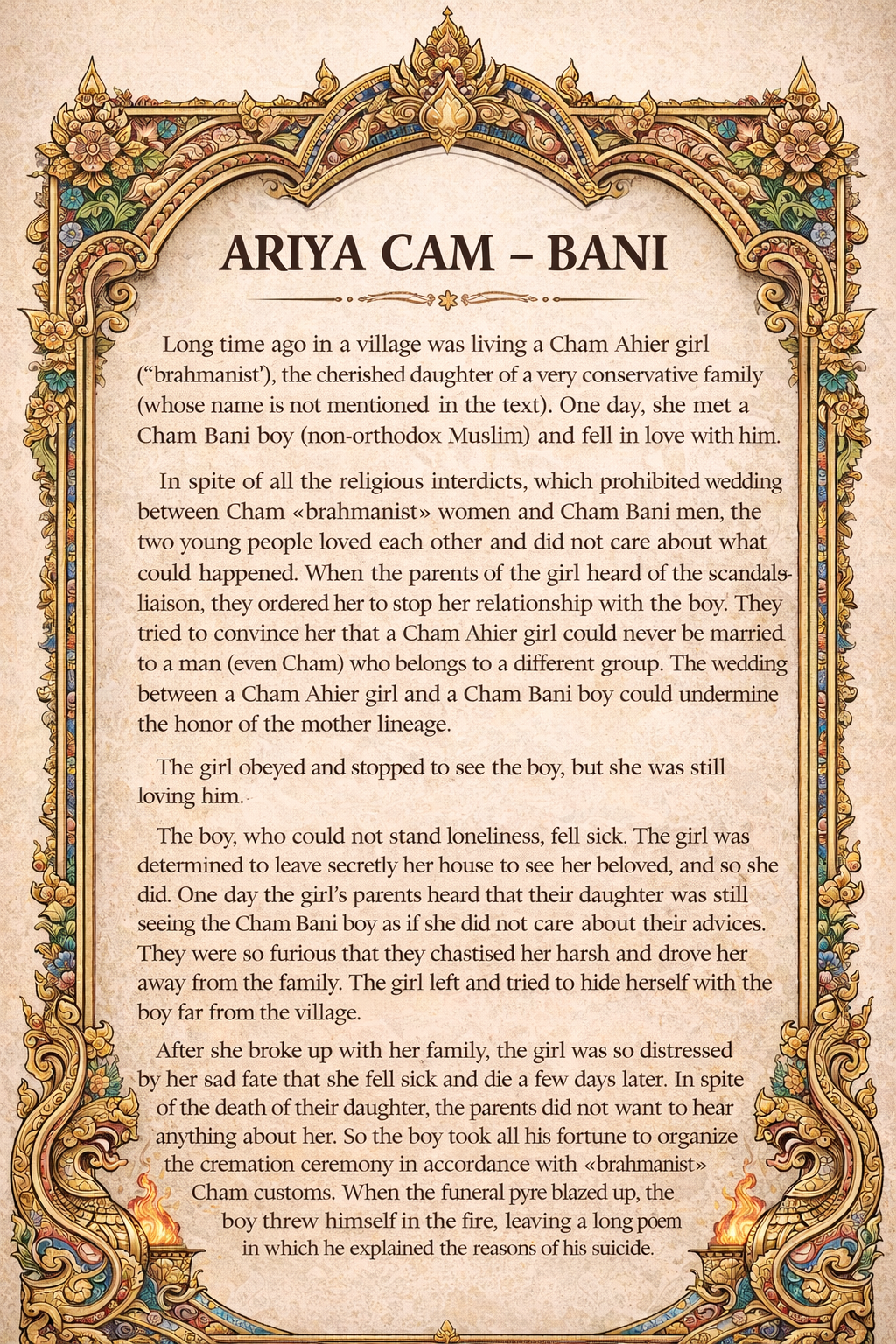
Figure 12. Ariya Cam - Bani (summary of Cam and Bani), printed in the work catalogued as No. 22, edited by Associate Professor Dr. Po Dharma, and published by the Department of Museums and Antiquities Malaysia in collaboration with the École Française d’Extrême-Orient in Kuala Lumpur in 2003.
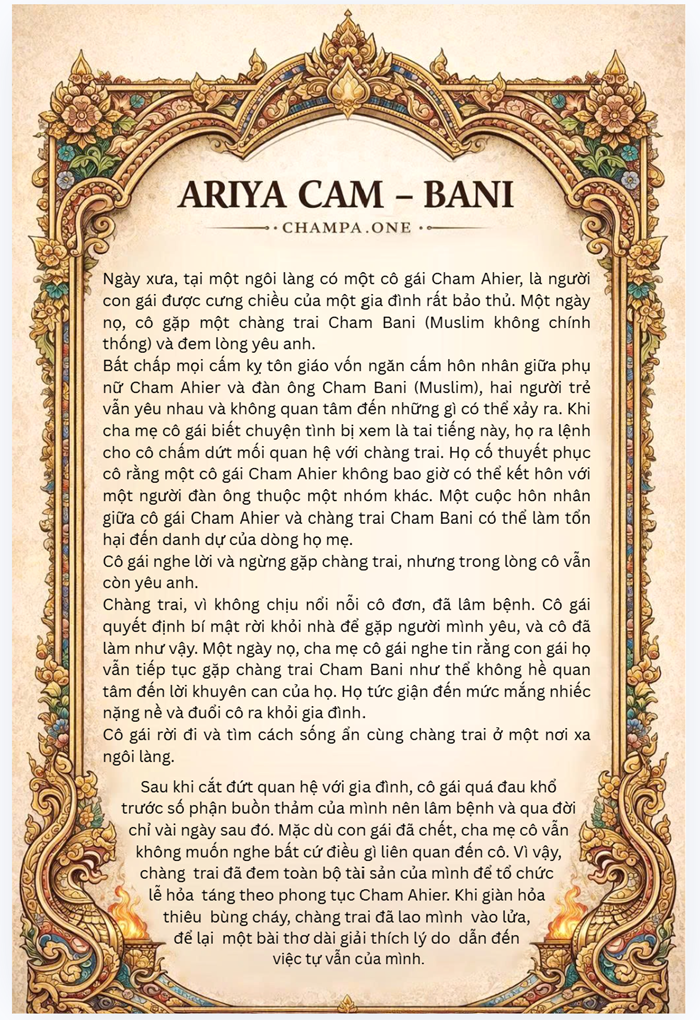
Figure 13. Ariya Cam - Bani (summary section), printed in the work catalogued as No. 22, edited by Associate Professor Dr. Po Dharma, and published by the Department of Museums and Antiquities Malaysia in collaboration with the École Française d’Extrême-Orient in Kuala Lumpur in 2003.
7. The Causes of the Misunderstanding of “Bani Religion”
The misunderstanding of “Bani religion” is a historical and social phenomenon that emerged mainly during the twentieth century, especially after 1963, in connection with changes in the religious life of the Cham community in Panduranga, now located in the provinces of Ninh Thuận and Bình Thuận. Before that period, in the writings of French scholars such as Étienne Aymonier, Antoine Cabaton, and R. P. Durrand, there was no concept of a “Bani religion.” The term “Bani” was used only as the name of a community or as terminology associated with Cham Muslims.
Before 1963, Cham people in Ninh Thuận and Bình Thuận often referred to Cham Muslims in southern Vietnam as “Jawa people,” meaning followers of orthodox Islam. At the same time, they referred to themselves as “Bani people,” indicating the Awal community (Agama Awal) with its Acar priesthood and indigenous Cham Islamic traditions. During this period, both groups understood that they belonged to Islam, differing only in their historical development, degree of local influence, and ritual organization.
After 1963, orthodox Islam from Saigon and southern Vietnam began to spread more strongly into Cham communities in Ninh Thuận through the influence of figures such as Mã Thanh Lâm, Từ Công Xuân, and Cham Muslim communities in Châu Đốc. From this point onward, two parallel religious tendencies emerged among the Cham in Phan Rang. One group continued to maintain traditional Awal Islam, with its Acar priesthood, locally influenced rituals, and distinctive social structure. The other group adopted orthodox Islam according to the global Sunni model, with doctrines, religious practices, and communal organization more closely aligned with the wider Muslim world.
In everyday life, Cham people began using the expressions “old Islam” and “new Islam” “Old Islam” referred to those who continued to follow Awal traditions, while “new Islam” referred to those who adopted orthodox Islam. However, the Cham themselves understood that “new Islam” was not a completely different religion from Agama Awal, but rather a modern tendency that removed certain local spiritual elements and moved toward a more standardized Islamic model. Therefore, both groups still regarded themselves as Muslim; the terms “old” and “new” were simply used to distinguish differences in ritual, priesthood, and social organization.
Over time, the group following orthodox Islam increasingly adopted the international designation “Islam” in order to emphasize its connection with the global Muslim community. This led to the distinction between “Cham Islam,” referring to Cham followers of orthodox Islam, and “Cham Bani,” referring to Cham followers of Awal Islam. This social distinction caused many outsiders to misunderstand “Bani” as the name of a separate religion opposed to Islam. In reality, it was only a distinction between Awal Islam and orthodox Islam, not between two different religions.
Later, some Awal Cham people in Phan Rang also gradually began referring to themselves as followers of “Bani religion,” causing the term “Bani” to become increasingly accepted as the name of a religion. However, this development was the result of a process of social labeling rather than a reflection of the term’s original historical meaning. At the same time, the fact that government agencies sometimes recorded “Religion: Bani” on identity documents also reinforced this interpretation within society. When “Bani” appeared as an independent religious category on official documents, many people naturally assumed that it was a separate religion distinct from Islam. In practice, however, this classification was mainly intended to distinguish the Cham Awal community from Cham Islam in administrative management, rather than to recognize “Bani” as an independent religion in theological or historical terms.
Importantly, even within Cham language and ritual, the term “Bani” continues to be used in a broad sense connected with Islam, believers, and the worship of Allah. In circumcision rituals among both Cham Awal communities in Ninh Thuận and Bình Thuận and Cham Muslims in southern Vietnam, the phrase “Ngak khatan tama Bani” is still used, meaning to perform circumcision in order to enter the faith. Similarly, both Awal priests in Panduranga and Cham Muslims in southern Vietnam use the phrase “Bac akhar Bani” to refer to studying the Qur’an. This demonstrates that “Bani” was originally a socio-religious term meaning “follower of Allah,” “Muslim,” or “member of the Islamic community,” rather than the name of a separate religion.
Therefore, the idea of “Bani religion” is essentially the result of a process of social differentiation between two Cham Muslim groups in the modern period. As differences in ritual, clothing, priesthood, and degrees of connection with global Islam became more visible, outsiders gradually came to misunderstand “Bani” as a separate religion. However, from the perspective of etymology, history, and religious practice, “Bani” has never been the name of an independent religion, but only a designation for Cham followers of Awal Islam or for followers of Allah within the Cham context.
8. Conclusion
Based on the combined evidence from etymology, Orientalist scholarship, ritual practice, and the history of the Cham community, several major conclusions can be drawn:
“Bani” Is a Social and Linguistic Term, Not the Name of a Religion
The term “Bani” originates from the Arabic word بني (banī), meaning “descendants,” “lineage,” “community,” or “followers.” This understanding is consistent with the observations of R. P. Durrand in the early twentieth century.
In Cham society, “Bani” is used to refer to followers of Islam, especially the Awal community, and appears in traditional rituals such as khitān, most notably in the phrase “Ngak khatan tama Bani.”
There is no evidence that a religion called “Bani” ever existed in the history of Champa, in the global Islamic tradition, or in the works of Étienne Aymonier and Antoine Cabaton.
The Idea of “Bani Religion” Is a Late Historical Development
The expression “Bani religion” appeared mainly in the twentieth century, especially after 1963, when orthodox Islam was reintroduced into Cham communities in Panduranga.
The distinction between “new Islam” and “old Islam,” together with the localization of ritual, language, and social perception, gradually caused the term “Bani” to be reinterpreted as the name of a religion.
However, this was the result of a process of social labeling and does not accurately reflect the original historical meaning of the term. It also lacks a strong academic basis.
The Correct Traditional Religious Designations of the Cham
- Agama Awal: the designation for the Cham Islamic system of early Islam in Champa, maintained by the Awal community and the Acar priesthood. Its theological foundation is rooted in Islam, although it developed within the Cham cultural environment, including the continued use of handwritten Qur’anic manuscripts transmitted from teacher to student.
- Agama Ahier: the designation for the religious system of the Ahier community, often described as later Islam. In this system, Allah is still recognized as the supreme deity, but rituals, deities, and the priestly structure continue to reflect Hindu influences and indigenous Cham culture.
These are the two traditional religious systems of the Cham people, each with its own designation, rituals, and institutional structure, reflecting the multilayered and localized character of religious life in Champa.
In summary, any interpretation of “Bani” as an independent religion is historically, linguistically, and religiously inaccurate. “Bani” should only be understood as a term referring to the indigenous Muslim community within Cham society. By contrast, historically and academically valid religious designations are Agama Awal and Agama Ahier. These two traditional religious systems coexist within the cultural space of Champa and both direct their worship toward Allah in different forms.
Hình 14. Bani trong "MuslimNames.com”. “بِسْمِ ٱللَّٰهِ ٱلرَّحْمَٰنِ ٱلرَّحِيمِ”: “Nhân danh Allah, Đấng Độ Lượng, Đấng Khoan Dung”.
References
1. Étienne Aymonier. Les Tchames et leurs religions. Paris, 1891.
2. Antoine Cabaton. Les Chams. Paris: Ernest Leroux, 1901.
3. R. P. Durrand. “Notes sur les Chams.” Bulletin de l’École Française d’Extrême-Orient (BEFEO), 1903.
4. Pierre-Bernard Lafont. Le Campā. Paris, 1981.
5. Rie Nakamura. Islam and Cultural Change among the Cham in Vietnam. Kyoto, 2009.
LINKs:
1. Agama Awal ở Champa: Cấu trúc tôn giáo và vai trò giáo sĩ Acar
2. Ts. Putra Podam: Phản biện danh xưng “Hồi giáo Bani” trong cộng đồng Cham
3. Kiến nghị: Xem xét và làm rõ tên gọi tôn giáo "Hồi giáo Bani"
4. Champa: Hồi giáo Awal và tín đồ Bani
5. Tôn giáo dân tộc Cham: "Danh bất chính - Ngôn bất thuận"
6. Tôn giáo Cham: Thuận Thiên giả tồn - nghịch Thiên giả vong
7. Acar là tôn giáo Awal (Hồi giáo Awal tại Champa)