In state governance, no term is permitted to appear arbitrarily in administrative documents, especially when it concerns religion and community identity. The inclusion of the designation “Bani” in the biographical records of candidates in certain localities raises an unavoidable question: is this merely professional negligence, or does it constitute a form of tacit recognition that has never been officially announced?
The Champa.one Editorial Board holds that the list of religions promulgated by the State constitutes the mandatory legal basis for administrative application. If a term that does not possess independent legal status is nonetheless entered into official records, this is no longer a matter of “flexible wording,” but rather an issue of legal compliance.
It must be emphasized that the biographical dossiers of candidates for People’s Council deputies at all levels and for National Assembly deputies are documents that undergo scrutiny, verification, and approval through multiple rounds of rigorous consultation. Every item of information regarding ethnicity and religion is required to be carefully reviewed prior to public disclosure. Therefore, it is difficult to regard the recording of “Bani,” “Cham Bani,” or “Bani Islam” as a simple technical error.
In Sơn Mỹ Commune (Lâm Đồng Province) and Xuân Hải Commune (Khánh Hòa Province), publicly disclosed dossiers have shown inconsistent forms of notation. Observations also indicate that in other localities where Cham candidates stand for election to People’s Councils at various levels or to the National Assembly, the manner of recording religious affiliation is likewise inconsistent. In some places it is abbreviated; in others it is combined with ethnic identifiers; elsewhere it is merged with different terms.
When the same content is presented in multiple ways across dossiers that have already passed through consultation procedures, the issue can no longer be considered an isolated phenomenon confined to a single locality. It points instead to a lack of standardization in guidance and oversight regarding the application of terminology on a broader scale.
Notably, on social media a number of groups holding extreme viewpoints have expressed joy and excitement upon seeing the word “Bani” appear in publicly released administrative documents related to electoral candidates. Some opinions interpret this as a sign of “de facto recognition.” Such reactions highlight the sensitivity of the issue and the risk of it being exploited for political interpretation.
The risk does not lie solely in a particular form of wording. When a term without clear legal status appears in dossiers that have undergone multiple layers of verification, silence from the competent authorities may be construed as implicit acceptance. This gap in explanation can easily become a foundation for extreme arguments, intensifying debate and deepening divisions within the community.
A precedent established in state-level candidate dossiers would no longer be a purely technical administrative matter. If not clarified in a timely manner, it could become a focal point for opposing viewpoints, generate public controversy, and lead to unpredictable consequences in the future.
The core issue, therefore, is accountability. The relevant authorities must respond publicly: on what legal basis is the term “Bani” recorded in candidate dossiers? If it is an error, it should be acknowledged and rectified. If it reflects a policy change, it must be officially announced and applied consistently nationwide.
Within a consultation process designed to be rigorous and subject to multiple layers of oversight, it is not credible to simply attribute this to a “technical error.” Transparency at this juncture is not merely an administrative requirement; it is a necessary condition to prevent social repercussions that may extend beyond anticipation.
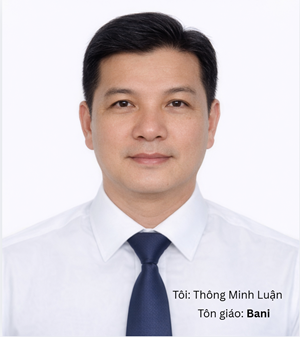
Figure 1. Mr. Thông Minh Luân, born on June 5, 1979, of Cham ethnicity, religion: Bani, candidate for the Sơn Mỹ Commune People’s Council.
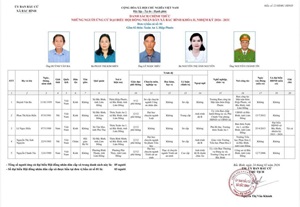
Figure 2. Nguyễn Thị Ánh Nguyên, of Cham ethnicity, religion: Bani Islam, candidate for the Bắc Bình Commune People’s Council.
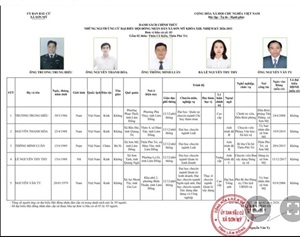
Figure 3. Thông Minh Luận, of Cham ethnicity, religion: Bani, candidate for the Sơn Mỹ Commune People’s Council.