In the power structure of the Royal Government of Kampuchea, the participation of ethnic minority communities is an important factor reflecting the level of inclusivity, social harmony, and political stability of a multi-ethnic state. In this overall picture, the Cham people represent a community with a long history, having experienced profound upheavals yet still maintaining their presence and gradually establishing a certain position in political and social life as well as within the state apparatus of Kampuchea.
Examining the role and position of the Cham people within the power structure not only has historical significance, but also helps clarify how the Royal Government of Kampuchea manages ethnic diversity and strengthens social cohesion.
From a historical perspective, the Cham community in Kampuchea has been present from the early period of the national power system, particularly through individuals holding positions in the military and central government prior to 1975.
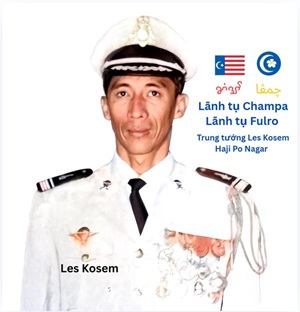
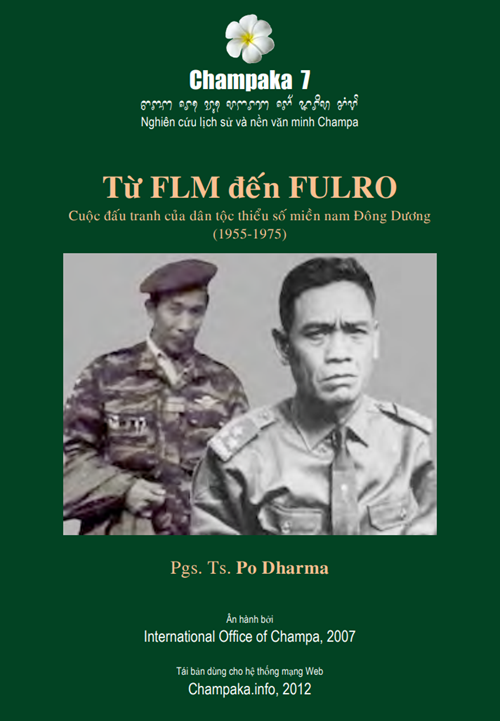
The most prominent example is Lieutenant General Les Kosem, a senior Cham officer in the Royal Khmer Armed Forces. The fact that a Cham individual reached the rank of general in the army during this period shows that the Cham community was not only present on the margins of society, but also participated in the military leadership of the country.
Notably, Lieutenant General Les Kosem’s role was not limited to the military sphere; it was also closely linked to an important personal political relationship with Head of State Norodom Sihanouk. According to many sources and scholarly assessments, Les Kosem was one of the close officers trusted by Head of State Norodom Sihanouk and was assigned many responsibilities related to internal security and stability. In the context of Kampuchea’s pursuit of neutrality and its confrontation with regional turmoil, he served as a bridge between the military establishment and political leadership, reflecting the presence of the Cham at the highest levels of the Kampuchean state power structure.
Therefore, the case of Les Kosem carries profound symbolic significance for the Cham community in Kampuchea’s political history.
The period from 1975 to 1979 under the Khmer Rouge regime was a tragic catastrophe for the entire Kampuchean society, and the Cham community was among the groups that suffered the most severe losses. The cultural and social life of the Cham was destroyed, community institutions were eliminated, and their social and political roles were almost completely eradicated. This disruption resulted in a severe rupture in the position of the Cham people within the state power structure.
After 1979, during the process of national reconstruction, the Cham community gradually recovered and reintegrated into social and political life. Basic civil rights were restored, and community life was rebuilt, providing the foundation for the Cham to re-engage with the state apparatus.
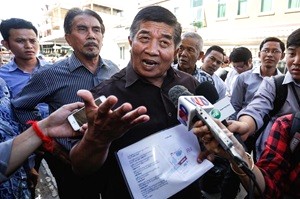
During this period, the Cham were not only present in the executive branch but also had representation in the national legislature. A notable example is Amad Yaya (Amath Yashya), a Cham individual who served as a Member of the National Assembly of Kampuchea, helping to represent the voice and aspirations of the community on issues related to citizenship, social affairs, and community development. The presence of the Cham in the National Assembly demonstrates that the community was not only legally recognized, but also had direct channels to participate in national policy-making.
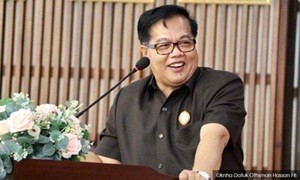
Under Prime Minister Hun Sen, policies promoting national unity and social harmony were intensified, creating opportunities for deeper Cham participation in the executive branch. A notable example is His Excellency Othsman (Osman) Hassan, a Cham individual who served as Senior Minister in charge of Special Missions, directly involved in coordinating matters related to ethnic minorities and religious affairs. In addition, other Cham individuals have held important positions in specialized ministries, such as Zakarya Adam, who served as Secretary of State (equivalent to Deputy Minister) at the Ministry of Social Affairs, Veterans, and Youth Rehabilitation of Kampuchea, contributing to the formulation and implementation of social welfare policies. Other Cham officials, such as Sith Ibrahim and Sos Mousine, have also served or are serving as Secretaries of State or Deputy Ministers within the Kampuchean state apparatus.
Although their number is not large, the presence of the Cham at various levels shows that the role of this community is not an isolated case, but a substantive component of the power structure of the Royal Government of Kampuchea.
Alongside the appointment of Cham personnel in the state apparatus, the Royal Government of Kampuchea has implemented many policies concerned with the Cham community, from ensuring cultural and social practices, supporting education and training, to investing in infrastructure, healthcare, and livelihoods in areas with large Cham populations. According to assessments by some Southeast Asian scholars, combining the assurance of cultural and social rights with the expansion of political participation for the Cham is a practical model of ethnic harmony, contributing to strengthening political trust and enhancing social stability.
Since 2023, when the Hun Manet Government was formed, policies toward the Cham have continued and been maintained. Looking back over the entire historical trajectory from the early presence of the Cham in the state power structure, represented by the important role of Lieutenant General Les Kosem with Head of State Norodom Sihanouk, through the tragic rupture under the Khmer Rouge, to the recovery and renewed participation in the National Assembly and the contemporary Royal Government of Kampuchea it can be affirmed that the Cham community has gradually established and consolidated its position within the national power structure, contributing to ethnic unity, political stability, and sustainable development in Kampuchea.
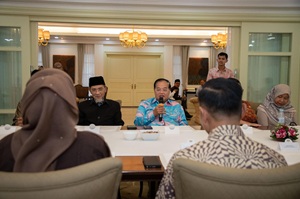
A number of Cham leaders have representation within the Royal Government of Kampuchea