Every year, the Cham Ahier community (Cham who worship Po Allah and are still influenced by indigenous Hindu beliefs) continues to maintain many traditional rituals at the Po Klong Mah Nai Temple, which venerates Po Klong Mah Nai, Queen Bia Som, and the Cham secondary consorts. However, the information released by the Binh Thuan Department of Culture claiming that Po Klong Mah Nai was the last king of Champa and that his royal treasures are preserved in the home of Ms. Nguyễn Thị Thềm, presented as a descendant and the “last princess” of the Cham people, is inaccurate.
Po Klong Mah Nai reigned during the period 1622-1627, whereas Nguyễn Thị Thềm (1911-1995) lived 368 years later, a temporal gap of nearly four centuries. Such a chronological distance precludes the possibility of any verifiable genealogical relationship between the two individuals. Even under the hypothetical assumption that Nguyễn Thị Thềm derived from a family connected to the administrative apparatus of Thuận Thành Prefecture, such an origin - if it existed - could only pertain to the class of officials appointed by the Nguyễn dynasty in the early nineteenth century, and bears no genealogical connection to the Churu or Raglai royal lineages associated with Po Klong Mah Nai and Po Rome.
It should be emphasized that Po Klong Mah Nai was a Muslim ruler of Churu ethnicity, who transmitted royal authority to Po Rome, also a Churu, reflecting a clear continuity of ethnicity, religion, and succession mechanisms within the late Champa polity at Panduranga. This Churu-led royal dynasty persisted through the end of the Panduranga period and extended its influence into the Thuận Thành Prefecture era, amid political transformations under Nguyễn dynastic administration.
Nevertheless, identifying Nguyễn Thị Thềm as a member of the Thuận Thành royal lineage is not feasible, owing to the complete absence of genealogical records, historical documentation, inscriptions, or reliable primary sources. In reality, the Cham communities of Bình Thuận and Ninh Thuận today no longer maintain any demonstrable linkage to the royal lineages of Champa, particularly the seventeenth-century Churu Muslim dynasties. Accordingly, any attempt to associate Nguyễn Thị Thềm with the Champa royal family or the political authority of Thuận Thành Prefecture remains purely speculative, fails to meet standards of historical evidence, and cannot be accepted within rigorous academic scholarship.
The artifacts once kept in Ms. Thềm’s house were actually entrusted to her by a Churu descendant for safekeeping amid the social upheavals of the mid-20th century. They are not original royal possessions of the Po Klong Mah Nai dynasty. The royal heirlooms and rituals of the Po Klong Mah Nai or Po Rome courts from the early 17th century have been carefully preserved within the Churu family in Panduranga and have never been transferred to other branches or outside individuals.
This confusion over the origin of the treasures and claims of inheritance has led to many inaccurate articles, reports, and news stories, causing misunderstandings for both the Cham community and international readers. Therefore, it is necessary to correct the records and heritage information to ensure historical accuracy, respect Cham religious and cultural traditions, and uphold the rules of preserving family heirlooms within the Churu lineage.
A. Information
According to Dr. Putra Podam, the claims widely circulated by many media outlets in Vietnam that Ms. Nguyễn Thị Thềm is the ‘last princess of the Cham people’ or a descendant of King Po Klong Mah Nai a king who followed Islam and supposedly passed down his royal heirlooms are mistaken hypotheses that need to be reconsidered.
Historical records and ethnic traditions show that, as the Champa kingdom weakened, kings and royal families retreated to the mountains and lived among the Churu and Raglai communities. The treasures left by the monarchs were carefully preserved by successive generations of Churu and Raglai people, sometimes carried along during periods of turmoil. By around 1940, when Ms. Nguyễn Thị Thềm was identified as a descendant of Cham officials under the new administrative system established by the Nguyễn dynasty, some valuable items from the former dynasty were entrusted to her by the Churu community for safekeeping not because she was a direct descendant of Po Klong Mah Nai or had royal inheritance rights.
Nguyễn Thị Thềm (1911-1995) may be hypothetically considered a descendant of an official who once served in the administrative apparatus of the late Thuận Thành Prefecture, under appointments granted by Emperors Gia Long and Minh Mệnh; however, this assumption lacks any substantiated basis due to the absence of reliable historical sources.
The last three rulers of Thuận Thành Prefecture were all Muslims (Bani Awal):
- Po Saong Nyung Ceng (Nguyễn Văn Chấn, reigned 1799-1822).
- Po Klan Thu (Nguyễn Văn Vĩnh, reigned 1822-1828).
- Po Phaok The (Nguyễn Văn Thừa, reigned 1828-1832).
Nguyễn Thị Thềm resided in Tịnh Mỹ village, Phan Thanh commune, Bắc Bình district, Bình Thuận Province, and belonged to the Cham Ahier community. In terms of chronology, ethnicity, and religion, she cannot be a direct descendant of Po Klong Mah Nai (reigned 1622-1627), a ruler of the Churu lineage who succeeded Po Rome. Therefore, there exists no historical or legal basis to establish any right of ownership or inheritance for Nguyễn Thị Thềm over royal heirlooms or assets associated with the Po Klong Mah Nai dynasty.
Conclusion:
Ms. Nguyễn Thị Thềm may be a descendant of a Cham official who served under the last rulers of the Thuận Thành district, including Po Saong Nyung Ceng, Po Klan Thu, or Po Phaok The.
Ms. Nguyễn Thị Thềm (Cham Ahier) cannot be a direct descendant of King Po Klong Mah Nai (Islam, Churu ethnicity). The dynasty of Po Klong Mah Nai (1622-1627) continued through 19 subsequent kings before reaching the final ruler Po Phaok The (1828-1832). See the list of kings in Section C.”
B. Po Klong Mah Nai (Maha Taha)
Po Klong Mah Nai (reigned 1622-1627) was a king who followed Islam and was notable for his devout adherence to the faith, holding the Islamic title Maha Taha. According to the Panduranga chronicle (Sakkarai dak rai patao), Po Mah Taha had no blood relation to the Po Klong Halau dynasty, a previously powerful lineage in Panduranga. He ascended the throne in the year of Tuất and abdicated in the year of the Rabbit, ruling for six years, with the capital located at Bal Canar (Parik-Panduranga). In Sino-Vietnamese historical records, Po Mah Taha is transcribed as Bà Khắc-Lượng Như-Lai.
The reign of Po Klong Mah Nai marked an important period in the Islamization of Panduranga while maintaining the cultural and indigenous religious influences of Champa. Under his rule, Islam became the principal religion at court and exerted a profound influence on the religious and social life of the Cham Ahier community in Panduranga.
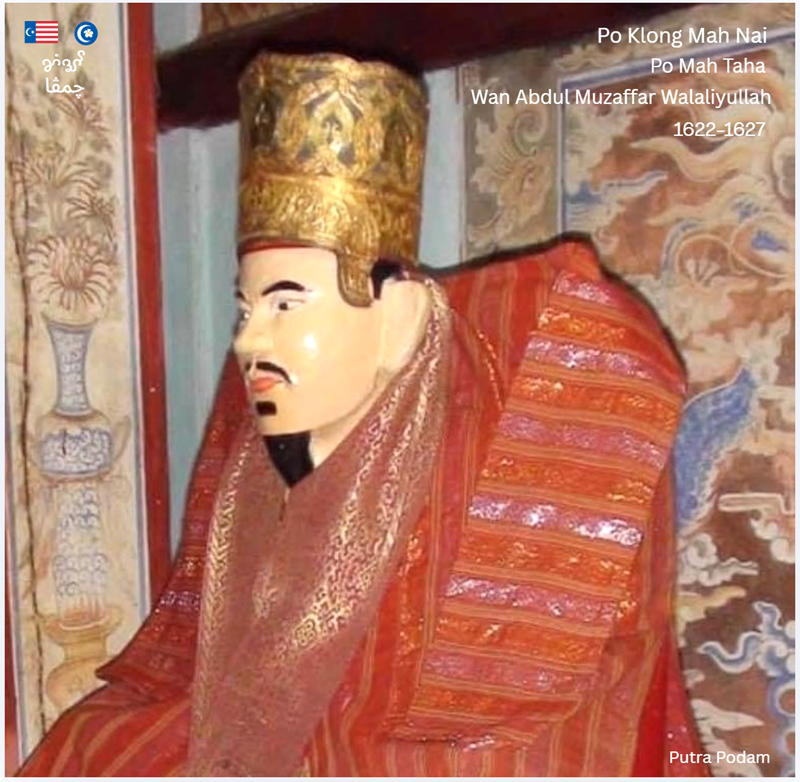
Figure 1. King Po Klong Mah Nai (Po Mah Taha), who reigned from 1622 to 1627, a devout follower of Islam. Photo: Putra Podam.
According to French researchers, numerous scholarly sources, and the Panduranga chronicle (Sakkarai dak rai patao), Po Klong Mah Nai (1622-1627), a king who followed Islam, married off his daughter Than Cih or Sucih (a follower of Islam) and passed the throne to King Po Rome (1627-1651).

Figure 2. Po Rome (1627-1651), Po Rome was revered and worshiped by the Cham people according to their sect: Ahier followers (Hindus who worship Allah) or Awal followers (Islam). If venerated according to Yang, he is called Yang Po Rome (the god Po Rome). If venerated according to Cei, he is called Cei Asit. If venerated according to Atuw (Islam), he is called Cahya. If venerated according to Yang Baruw (Islamic origin), he is called Po Gahluw. Photo: Putra Podam.
King Po Rome (reigned 1627-1651) ascended the throne in Panduranga with his principal queen Bia Sucih (Bia Than Cih) and a secondary consort Bia Than Can, of the Rade ethnicity, whose statue is located inside the Po Rome tower.
During his time in Makkah, called Serembi Makkah by the Malay, corresponding to the Kelantan Sultanate (Malaysia), Po Rome married the Kelantanese princess Puteri Siti (Princess Siti). From this point, Po Rome officially took the Islamic name Thánh Nik Mustafa, with the full name Nik Mustafa Bin Wan Abul Muzaffar Waliyullah, formally becoming a recognized member of the Islamic royal lineage in Malaysia. Malaysian chronicles record that the present-day rulers of the Kelantan Sultanate are descendants of Po Rome.
Ngoc Khoa, full name Nguyễn Thị Ngọc Khoa, whom the Cham people referred to as the fourth consort Bia Ut (Ut; Mal. Skt. Uttara: Northern Princess), meaning “Northern Princess” or “Princess of Đại Việt.” According to the Nguyễn Phước family genealogy, Ngoc Khoa was married to King Po Rome in the year Tân Mùi (1631). This marriage strengthened diplomatic relations between the two countries, allowing the Nguyễn lords to focus on the Trịnh lords in Đàng Ngoài, and created opportunities for the Vietnamese to expand southward.
Additionally, Po Rome married several other princesses, including H’bia Laku Makam (Queen Laku Makam), H’bia Hatri (Queen Hatri), and H’bia Sumut (Queen Sumut). Some Po Rome legends record the phrase: H’bia Sumut tok Cam di Kut. Based on this saying, the Cham people consider H’bia Sumut to be a princess of Islamic.
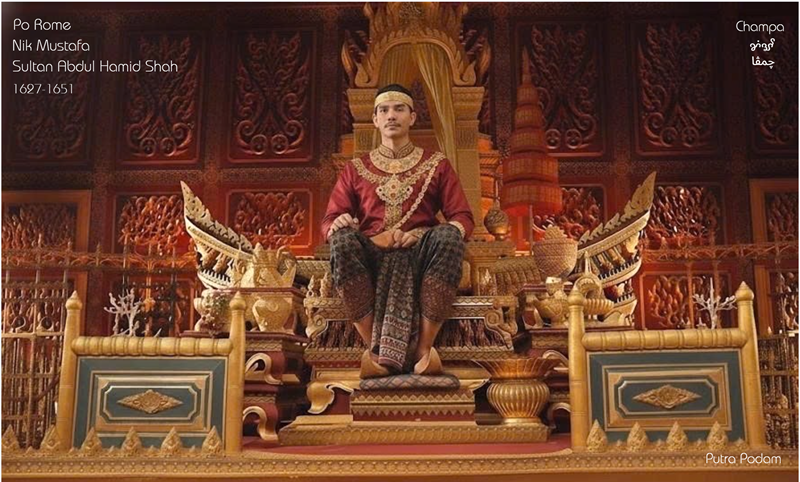
Figure 3. King Po Rome, regnal name: Nik Mustafa Bin Wan Abul Muzaffar Waliyullah. He belonged to the Islamic royal lineage in Serembi Makkah, part of the Kelantan Sultanate, Malaysia. Photo: Putra Podam.
C. PANDURANGA: Các đời vua sau Po Mah Taha
VI. Triều đại Po Mah Taha (Po Klong Mah Nai)
1[23]. Po Mah Taha (1622-1627)
Ngài không có liên hệ thân tộc với vương triều Po Klong Halau, lên ngôi năm Tuất, thoái vị năm Thỏ, trị vì 6 năm, đóng đô ở Bal Canar (Parik - Panduranga).
2[24]. Po Romé (1627-1651)
Con rể của vua Po Mah Taha, lên ngôi năm Thỏ, thoái vị năm Thỏ, trị vì 25 năm, đóng đô ở Bal Canar (Parik - Panduranga).
3[25]. Po Nrop (1652-1653)
Po Nrop là con trai trưởng của Po Romé (theo gia phả là con của vua Po Rome), lên ngôi năm Thìn, thoái vị năm Tỵ, trị vì 1 năm. Ngài xây một thành trì ở Bal Canar (Parik - Panduranga).
4[26]. Po Saktiraydapaghoh (1654-1657)
Con rể vua Po Rome kết hôn với Po Mul là con gái Po Rome và H’bia Than Chan, nhận tấn phong của vua Việt Nam vào năm Ngọ, thoái vị năm Dậu, trị vì 4 năm, đóng đô ở Bal Canar (Parik - Panduranga).
5[27]. Po Jatamah (1657-1659)
Con rể của vua Po Saktiraydapaghoh là Con nuôi của Po Nrop, nhận tấn phong của vua Việt Nam vào năm Dậu, với chức phong là Ndo Naok Ndai Tang Kuan (Ðô Ðốc Ðại Tướng Quân), trị vì 2 năm, đóng đô ở Bal Canar (Parik - Panduranga).
6[28]. Po Saot (1655, 1660-1692)
Con của vua Po Saktiraydapaghoh, nhận tấn phong của vua Việt Nam vào năm Mùi, nhưng cho mãi đến năm Tý, ngài mới lên ngôi. Ngài thoái vị năm Thân, trị vì 33 năm, đóng đô ở Bal Canar (Parik - Panduranga).
Thời kỳ bị gián đoạn (1692-1695)
Sau Po Saot, biên niên sử nói là có sự gián đoạn triều đại trong vòng 3 năm.
7[29]. Po Saktiraydapatih (1695, 1696-1727)
Em ruột của vua Po Saot, nhận tấn phong của vua Việt Nam vào năm Hợi, nhưng cho mãi đến năm Tý, ngài mới lên ngôi. Ngài thoái vị năm Mùi, trị vì 32 năm, đóng đô ở Bal Canar (Parik - Panduranga).
8[30]. Po Ganuhpatih (1728-1730)
Cháu của vua Saktiraydapatih, nhận tấn phong của vua Việt Nam vào năm Thân, thoái vị năm Tuất, trị vì 3 năm, đóng đô ở Bal Canar (Parik - Panduranga).
9[31]. Po Thuntiraidaputih (1731-1732)
Con của vua Po Saot, nhận tấn phong của vua Việt Nam vào năm Hợi với chức phong là Kham Lik Mbin (Khâm Lý Binh), thoái vị năm Tý, trị vì 1 năm, đóng đô ở Bal Canar (Parik - Panduranga).
10[32]. Po Rattiraydaputao (1732, 1735-1763)
Cháu của vua Po Saktiraydapatih, nhận tấn phong của vua Việt Nam vào năm Tý cho đến năm Thỏ, ngài mới lên ngôi. Ngài thoái vị năm Mùi, trị vì 29 năm, đóng đô ở Bal Canar (Parik - Panduranga).
11[33]. Po Tisundimahrai (1763-1765)
Không rõ ngài có liên hệ gì với thân tộc của vương triều vua Po Mâh Taha. Nhận tấn phong của vua Việt Nam vào năm Mùi với chức phong là Kai Bait Mbin (Cai Bếp Binh). Ngài thoái vị năm Dậu, trị vì 1 năm, đóng đô ở Bal Canar (Parik - Panduranga).
12[34]. Po Tisuntiraydapaghoh (1765, 1768-1780)
Con của Po Thuntiraidaputih, nhận tấn phong của vua Việt Nam vào năm Dậu cho đến năm Tý ngài mới lên ngôi. Ngài thoái vị năm Tý, trị vì 13 năm và đóng đô ở Bal Canar (Parik - Panduranga).
13[35]. Po Tisuntiraydapuran (1780-1781)
Ngài không có liên hệ thân tộc với vua Po Tisuntiraydapaghoh, nhận tấn phong của vua Việt Nam vào năm Tý với chức phong là Praong “quan lớn››. Sau 1 năm trị vì, ngài bị quân Việt Nam bắt vào năm Sửu, nhưng không cho biết lý do gì. Đóng đô ở Bal Canar (Parik - Panduranga).
14[36]. Cei Brei (1783-1786)
Con của vua Po Tisuntiraydapaghoh (triều 33), nhận tấn phong của Nguyễn Nhạc (Tây Sơn) vào năm Thỏ với chức tấn phong là Ceng (Chưởng Cơ), trị vì 4 năm và thoái vị năm Ngọ. Đóng đô ở Bal Canar (Parik - Panduranga).
15[37]. Po Tisuntiraydapuran (1786-1793)
Sau một lần lên ngôi vào năm Tý, trị vì một năm, vua Nguyễn Nhạc lại tấn phong cho ngài năm Ngọ với chức Ceng (Chưởng Cơ), trị vì 8 năm sau đó bị bắt đưa về Ndaong Nai (Ðồng Nai) vào năm Sửu.
VII. Triều đại không biết xuất xứ
16[38]. Po Ladhuanpaghuh (1793-1799)
Ngài xuất thân từ gia đình nông dân, nhận tấn phong của vua Việt Nam vào năm Sửu với chức phong là Ceng (Chưởng Cơ), trị vì 7 năm và thoái vị năm Mùi. Không biết ngài đóng đô ở đâu.
17[39]. Po Saong Nhung Ceng (1799-1822)
Không biết ngài xuất thân từ gia đình nào. Ngài nhận tấn phong của vua Việt Nam vào năm Mùi với chức Ceng (Chưởng Cơ), trị vì 24 năm và thoái vị vào năm Ngọ. Ngài đóng đô ở Bal Canar (Parik - Panduranga).
Tác phẩm Sakkarai Dak Rai Patao chấm dứt với triều đại Po Soang Nhung Ceng (1799-1822). Ngược lại, một số biên niên sử khác viết bằng tiếng Chăm cho rằng sau ngày từ trần của Po Saong Nhung Ceng tại Bal Canar (Phan Rí) vì tuổi già chứ không phải là người chạy sang Campuchia lánh nạn như một số nhà nghiên cứu (Dorohiem & Dohamide) hiểu lầm, còn có hai vị vua cuối cùng tiếp tục lên ngôi, đó là:
18[40]. Po Klan Thu (1822-1828)
Po Klan Thu là phó vương dưới thời Po Saong Nhung Ceng.
19[41]. Po Phaok The (1828-1832)
Po Phaok The là con của Po Saong Nhung Ceng (1799-1822), tức là tiền nhân của dòng Bà Thềm ở Phan Rí hôm nay.
Lợi dụng ngày từ trần của Lê Văn Duyệt (Tổng Trấn Gia Định Thành) vào năm 1832, vua Minh Mạng quyết định xóa bỏ Thuận Thành trấn thuộc cực nam Champa trên bản đồ Đông Dương.
Biên niên sử Panduranga (Sakkarai Dak Rai Patao) được chép lại vào năm đệ nhất của triều đại Ham Ngi (Hàm Nghi), tức là vào năm 1884 (Sau Hiệp ước Harmand năm 1883 và đến năm 1884 người Pháp đã chiếm và đặt ách thống trị lên toàn bộ Đông Dương).
D. Ms. Nguyễn Thị Thềm, Custodian of the Thuận Thành District Treasures
Nguyễn Thị Thềm, often referred to by the media in Bình Thuận Province as “the last princess,” was born in 1911 and passed away in 1995. She bore the surname Nguyễn, as do many Cham people in Bình Thuận. She resided in Tịnh Mỹ village, Phan Thanh commune, Bắc Bình district, Bình Thuận Province.
After Nguyễn Thị Thềm’s death in 1995, Ms. Nguyễn Thị Đào inherited the responsibility of safeguarding the large treasure collection from that point until her own passing in 2015. Prior to that, the entire treasure was preserved under the care of Ms. Nguyễn Thị Thềm. Having no children of her own, Ms. Nguyễn Thị Thềm entrusted the custody of the treasure to Ms. Nguyễn Thị Đào, her youngest niece. Ms. Nguyễn Thị Đào is the youngest daughter of Ms. Nguyễn Thị Ngôi, the youngest sister of Ms. Nguyễn Thị Thềm. Since Ms. Nguyễn Thị Ngôi passed away early, Ms. Nguyễn Thị Đào was directly raised and cared for by Ms. Nguyễn Thị Thềm.

Figure 4. Ms. Nguyễn Thị Thềm, caretaker of the Thuận Thành District treasures. Photo: Collection.
According to Mr. Văn Hồng Tịnh, the royal family currently preserves over 100 valuable artifacts, including crowns, royal robes, swords, guards’ helmets, imperial edicts, manuscripts of Nguyễn dynasty kings, as well as numerous garments and jewelry of queens, crown princes, and princesses. Additionally, there are many antiques such as bowls, plates, incense burners, candlesticks, and uniquely inlaid betel boxes. All these artifacts date back nearly four centuries, clearly reflecting the exquisite craftsmanship of the ancient Cham people (according to an article by Nguyễn Xuân Lý published in Người Lao Động newspaper).
Mr. Tịnh stated that prior to 1940, according to traditions passed down over many centuries, when Panduranga fell, the king retreated to the mountains and sought refuge among the Churu and Raglai people. The royal treasures, entrusted by the king, were carefully preserved, revered, and continuously carried by successive generations of Churu and Raglai even during times of turmoil.
It was not until 1940 that, upon confirming that Ms. Nguyễn Thị Thềm belonged to the lineage of Cham officials, of Churu and Raglai descent, the treasures were actively brought down from the deep forests and entrusted to her for safekeeping.
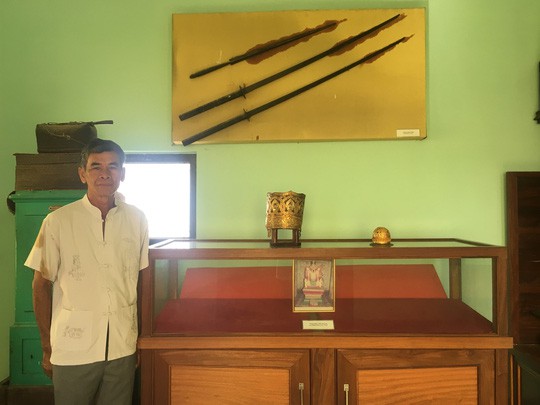
Figure 5. Mr. Văn Hồng Tịnh beside the royal family’s treasure and a photograph of the statue of King Po Klong Mah Nai. Photo: Collection.
According to Báo Bình Thuận (May 6, 2022), in the article “What Do We Know About the Cham Royal Family’s Contribution During the ‘Golden Week’,” Ms. Thềm recounted that after the August Revolution of 1945, when President Hồ Chí Minh and the Việt Minh called on the people to participate in the “Golden Week” and establish the “Independence Fund,” the senior members of her lineage convened to decide which treasures to donate. According to Ms. Nguyễn Thị Thềm, the main items donated were the king’s crown and the Cham queen’s hair bun. She personally performed the ancestral ritual before presenting the treasures to the Việt Minh.
In the article “Regarding the Treasures of the Nguyễn Thị Thềm Royal Lineage,” author Phạm Khánh Toàn noted that Mr. Dụng Thiết and Ms. Nguyễn Thị Thềm, with the family’s consent, delivered several treasures, including a golden crown, a golden hair bun, a bunch of golden bananas, a golden soursop, and a golden starfruit, with a total weight of several kilograms.
In VietnamFinance magazine, author Minh Tâm, writing about the “Golden Week” in Bình Thuận, recorded: “Ms. Nguyễn Thị Thềm, of the Cham royal lineage, donated the king’s crown and the gold betel-and-areca tray passed down for generations.”
The online newspaper of the Central Committee of the Communist Party of Vietnam, in the article “From the ‘Golden Week’ to the ‘Independence Fund’: Valuable Lessons in Mass Mobilization” (author Tạ Quang Đạo, Academy of Politics - Ministry of National Defense, published September 19, 2019), also stated: “Ms. Thềm Cham Princess contributed a golden hat, a soursop, a starfruit, a bunch of golden bananas, and even the golden betel tray of the Cham royal family…”
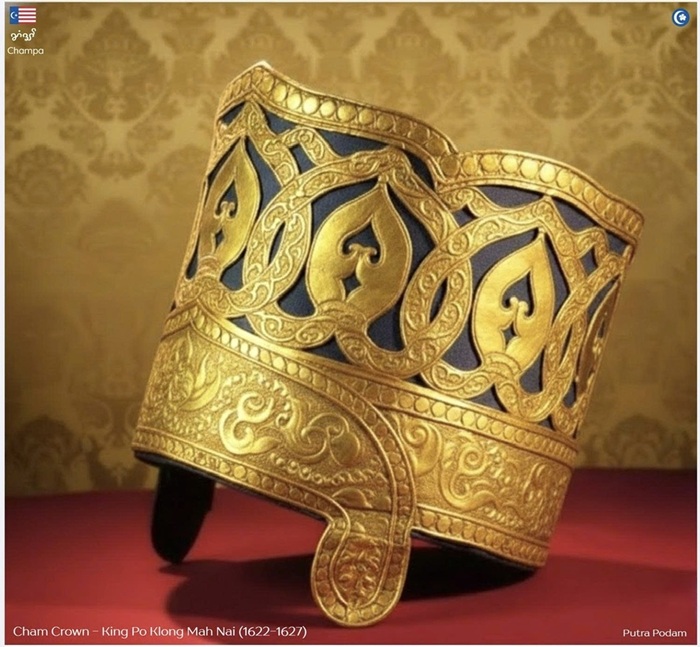
Figure 6. Although this crown is currently presented as the “crown of King Po Klong Mah Nai,” based on its form, artistic style, religious context, and historical documentation, there is no scientific basis to identify it as the actual crown used by King Po Klong Mah Nai (Maha Taha), the 17th-century ruler of Panduranga. The artifact should be understood as a ceremonial or symbolic object, created in a later period for ritual purposes, intended to deify the king’s image at the temple, rather than as an original historical item of the dynasty. This assessment recommends that the scientific council revise the display label and classification of the artifact, while also expanding research to clarify the ritual history and the process of royal deification in Champa. Photo: Putra Podam.
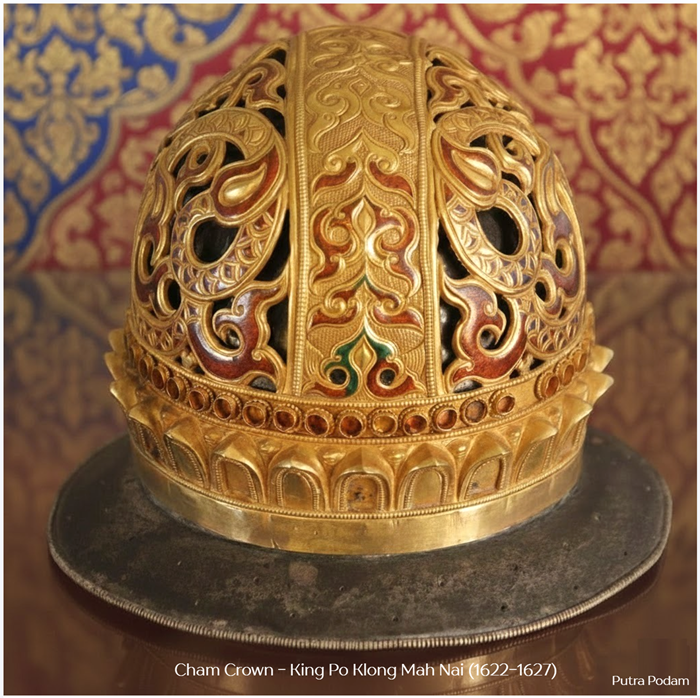
Figure 7. According to the Bình Thuận Department of Culture, this artifact is presented as a gold hair bun ornament of Queen Bia Som, featuring exquisite craftsmanship and characteristic of late Cham ceremonial jewelry. It may have been a type of jewelry reserved for women of the royal or high aristocratic class, used in court and religious ceremonies. However, there is insufficient scientific evidence to confirm that this artifact was a personal item of Queen Bia Som, the principal consort of King Po Klong Mah Nai. No historical texts or inscriptions directly associate this object with her, and the artifact also lacks clear archaeological context to identify a specific owner. Moreover, gold hair bun ornaments are not unique items but a common type of Cham royal jewelry that could have been used by multiple queens, consorts, or noblewomen. From a historical and archaeological research perspective, assigning the name of a historical individual to an artifact without verified evidence is inconsistent with scientific principles. In this case, the most appropriate and cautious approach is to identify the artifact according to its type, dating, and cultural context, rather than attributing it to Queen Bia Som based on speculation or oral tradition. Therefore, it can be concluded that the object is a Cham royal hair bun ornament of high historical and artistic value, but its attribution to Queen Bia Som remains unverified and requires careful consideration. Photo: Putra Podam.

Figure 8. Royal edict preserving the handwriting of a Nguyễn dynasty king. Photo: Collected.

Figure 9. Royal headdress??? Photo: Collected.

Figure 10. Royal betel set. Photo: Collected.
Some treasures that the Bình Thuận Department of Culture considers to be associated with King Po Klong Mah Nai.
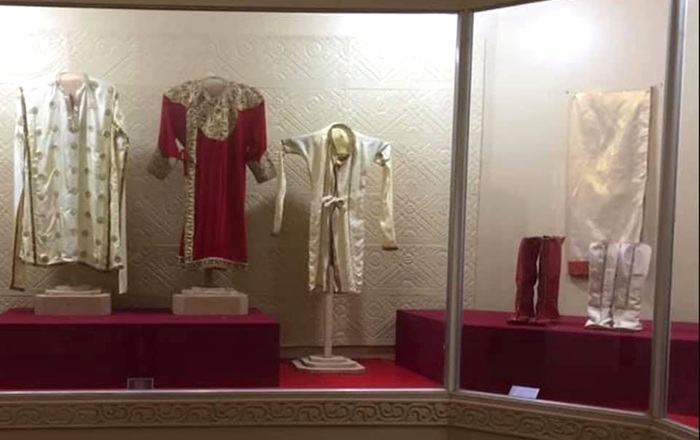
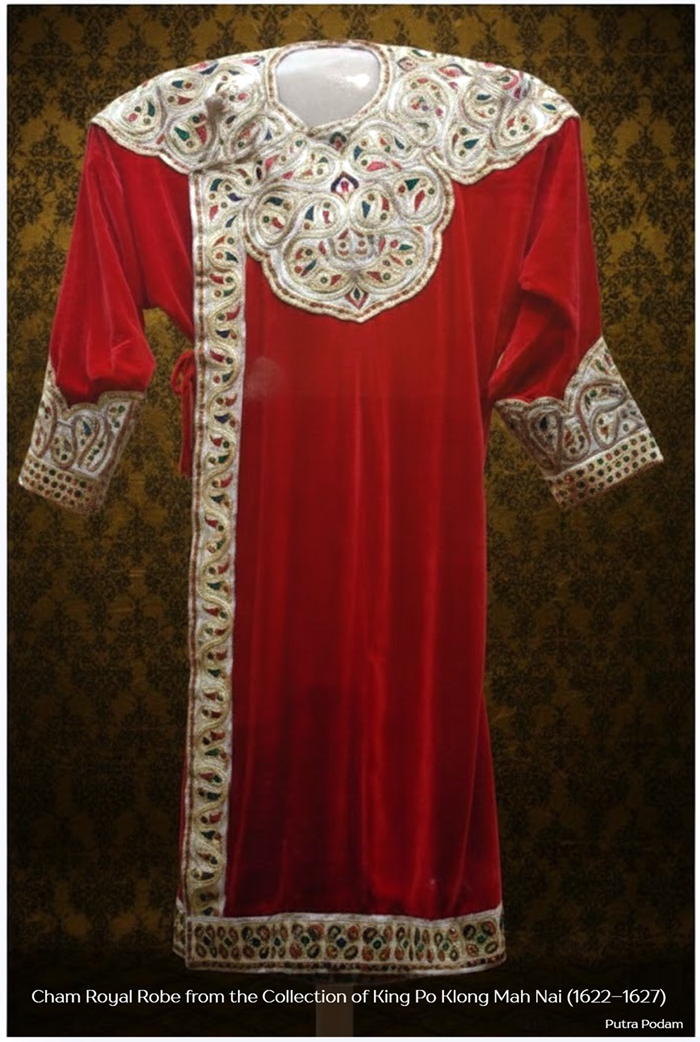

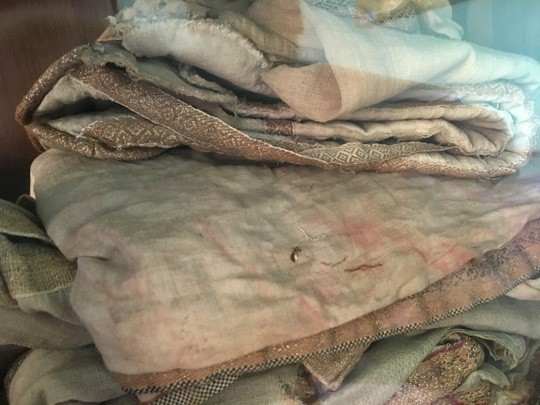
The royal attire has severely deteriorated.
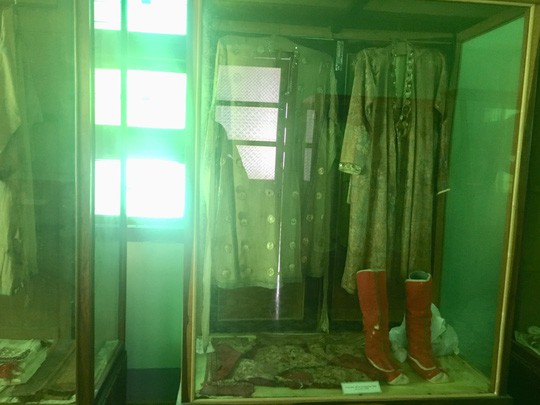
The royal attire of King Po Klong Mah Nai and Queen Bia Som is made of high-quality fabric adorned with intricate patterns and exquisite designs. However, to date, the exact materials of these garments have not yet been identified.
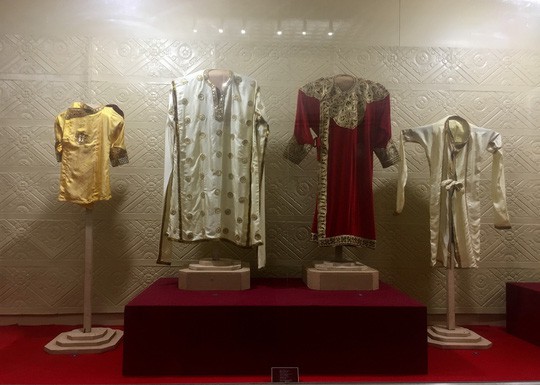
The costumes of the king, queen, and princesses have been restored at the Cham Cultural Exhibition Center.
LINKs: Liên kết liên quan
1. Petition Requesting the Correction of Historical Information at the Po Klong Mah Nai Heritage Site
2. Kiến nghị hiệu đính thông tin lịch sử tại di tích đền Po Klong Mah Nai
3. Po Klong Mah Nai truyền ngôi cho Po Rome (Nik Mustafa)
4. King Po Klong Mah Nai abdicated in favor of Po Rome (Nik Mustafa) (English)
5. Sở Văn hóa Bình Thuận đưa thông tin sai lệch về Po Klong Mah Nai
6. Bà Nguyễn Thị Thềm không phải hậu duệ của vua Po Klong Mah Nai
7. Putra Podam video: Vua Po Klaong Manai vị vua Islam (Hồi giáo)
8. Putra Podam video: Tháp Champa: Đền thờ Po Klaong Mah Nai
9. Video Đài Bình Thuận (BTV): Lễ phụng tế Po Klong Mah Nai ???
Tài liệu tham khảo
1. Aymonier, Étienne. Notes sur les Chams et leur religion. Paris: 1891.
2. Cabaton, Antoine. Essai sur la langue cam. Paris: 1901.
3. Maspero, G. Le Royaume de Champa. Paris: 1928.
4. Parmentier, Henri. Monuments chams de l’Annam, Tome I. Paris: Publications de l’École Française d’Extrême-Orient (EFEO), 1909.
5. Coedès, George. The Indianized States of Southeast Asia. Honolulu: University of Hawaii Press, 1968.
6. Moussay, Gabriel. Dictionnaire Cam-Français. Saigon: 1971.
7. Po Dharma. Le Panduranga (Campa) 1802-1835. Paris: École Française d’Extrême-Orient, 1987.
8. Po Dharma. L’histoire du Campa. Paris: 1989. Xem thêm Pierre-Bernard Lafont (ed.), Champa et le Monde Malais. Paris: 1995.
9. Mohd. Zamberi A. Malek. The Malay-Champa Historical Relations. Kuala Lumpur: 1995.
10. Sakkarai dak rai patao (Biên niên sử các vua Panduranga). Bản chép tay lưu hành trong cộng đồng Cham; đối chiếu theo Po Dharma, Chroniques des rois de Panduranga, EFEO Archives.
11. Quốc sử quán triều Nguyễn. Đại Nam Thực Lục. Bản dịch Viện Sử học, Hà Nội.
12. Bộ Văn hóa - Thông tin Việt Nam. Quyết định số 43/VH/QĐ ngày 7/1/1993 về công nhận di tích lịch sử và nghệ thuật quốc gia.