 Name: PhD.Putra Podam (Văn Ngọc Sáng)
Po Klong Mah Nai, also known as Po Mah Taha with the Islamic title Maha Taha, reigned over Panduranga from 1622 to 1627 and was one of the central figures in the history of seventeenth-century Panduranga-Champa. Numerous French scholarly sources classify him among the Muslim rulers, reflecting the significant role of Islam within the political and social structure of the Panduranga court. Born in Panduranga-Champa and deceased at Bal Canar (Parik-Panduranga), an area that today belongs to Phan Rí-Binh Thuan, Po Mah Taha was of Churu and Raglai ethnicity and had no blood ties to the Po Klong Halau dynasty (1579-1603), a royal line that exerted strong influence from the latter half of the sixteenth century to the early seventeenth century (Aymonier, 1890). According to the Panduranga chronicles (Sakkarai dak rai patao), he ascended the throne in the Year of the Dog and abdicated in the Year of the Cat, ruling for six years with the capital located at Bal Canar. In Nguyễn-dynasty Sino-Nom texts, his name was transcribed as Bà Khắc-Lượng Như-Lai, a Sinicized form of his original Cham appellation.
Po Klong Mah Nai (1622-1627) passed the throne to Po Rome (1627-1651). Po Rome was a king of Panduranga-Champa who adhered to and revered Islam.
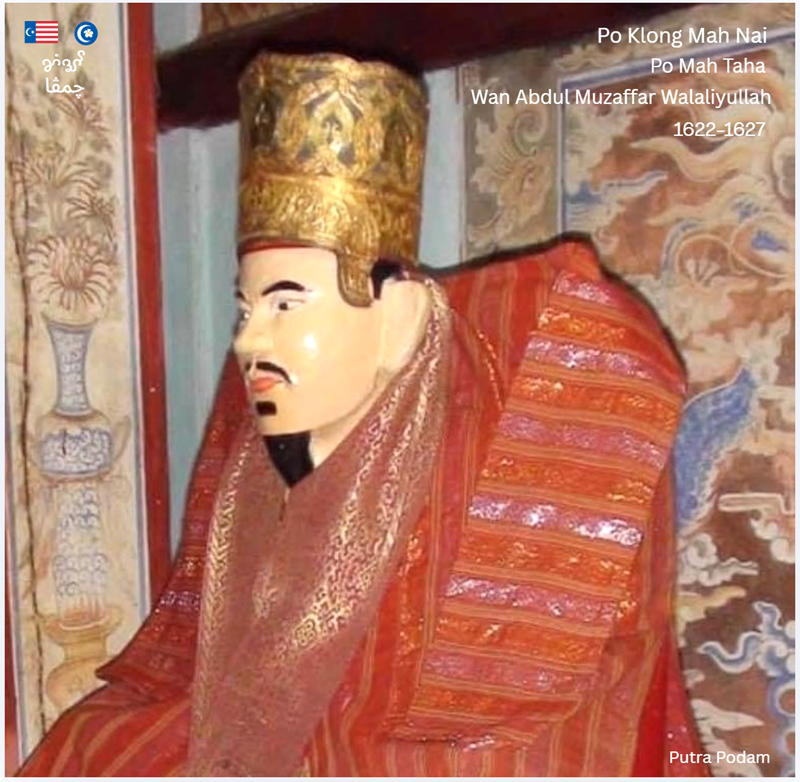
Figure 1. Po Klong Mah Nai (reigned 1622-1627), a Muslim king who was deeply devoted to Islam, bearing the regnal title Po Mah Taha. According to the Panduranga chronicles (Sakkarai dak rai patao), he ascended the throne in the Year of the Dog and abdicated in the Year of the Rabbit, ruling for six years with the capital located at Bal Canar (Panrik-Panduranga). The temple of King Po Klong Mah Nai was built on a sand hill near Palei Pabah Rabaong (Mai Lãnh hamlet, Phan Thanh commune), bordering Lương Bình hamlet, Lương Sơn commune, approximately 15 km from the Bắc Bình District People’s Committee and about 50 km from Phan Thiết City. According to H. Parmentier (Monuments chams de l’Annam, EFEO Publications, Paris, vol. 1, 1909, p. 38), Po Klong Mah Nai is the name by which King Po Mah Taha was known, who was the father-in-law of King Po Rome (1627-1651). The temple of Po Klong Mah Nai is a place of veneration for King Po Mah Taha and Queen Bia Som, together with another consort whose identity was unknown to the Cham at that time. Photo: Putra Podam.
Based on the content recorded on the stele in front of the temple and the ethnic cultural program of the Binh Thuan Radio and Television Station (attached), several pieces of information are presented that are inaccurate regarding Champa history, specifically concerning King Po Klong Mah Nai.
1. Content
The inaccurate information stated on the stele in front of the temple and by the Binh Thuan Radio and Television Station concerns three main points at the following time markers:
Item 1: At 0:30 - “Po Klong Mah Nai was the last king of the Champa Kingdom.”
Item 2: At 0:36 - “Po Klong Mah Nai ascended the throne in the early seventeenth century and ruled until 1627, when he abdicated in favor of his son-in-law, Po Klong Khul.”
Item 3: At 2:09 -“The northern temple is dedicated to the Cham queen Po Bia Som, while the southern temple is dedicated to a secondary queen of Vietnamese origin.”

Figure 2. The stele erected in front of the gate of King Po Klong Mah Nai’s Temple (1622-1627). Photo: Putra Podam.
-
Rebuttal of the claim: Po Klong Mah Nai was the last king of Champa
-
Rebuttal of the claim: Po Klong Mah Nai passed the throne to Po Klong Khul
-
Rebuttal of the claim: Po Klong Mah Nai married a Vietnamese secondary consort (Nguyễn Thị Ngọc Thương)
Binh Thuan Television (BTV) video:: The Ritual Ceremony in Honor of Po Klong Mah Nai ???
---> Review and verify the content inscribed on the stele erected within Po Klong Mah Nai (Maha Taha) Temple.
2. Rebuttal
Item 1: "Po Klong Mah Nai was the last king of the Champa Kingdom." [As stated on the stele and by the Binh Thuan Radio and Television Station].
Binh Thuan Television (BTV) video: The Ritual Ceremony in Honor of Po Klong Mah Nai ???
Correction:
According to Dr. Putra Podam, this constitutes inaccurate information about Champa history disseminated by the Binh Thuan Department of Culture and the Binh Thuan Provincial Radio and Television Station (BTV).
In 1993, the Po Klong Mah Nai Temple was recognized as a National Historical and Artistic Monument of Vietnam under Decision No. 43/VH/QD dated 7 January 1993. On the explanatory stele placed in front of the entrance gate, the Binh Thuan Department of Culture also states: "Po Klong Mah Nai was the last king of the Champa Kingdom."
The inscription on the stone stele identifying Po Klong Mah Nai as the “last king of the Champa Kingdom” represents a serious historical inaccuracy. According to the Panduranga chronicles (Sakkarai Dak Rai Patao), Po Klong Mah Nai bearing the Islamic title Maha Taha reigned from 1622 to 1627 at Bal Canar-Panduranga and was the eighteenth ruler of the eighth dynasty. He was a Muslim king who strictly adhered to Islam. Historical records indicate that Po Klong Mah Nai abdicated in favor of Po Rome after marrying his daughter, Sucih (Bia Sucih), to Po Rome in order to consolidate dynastic succession in Panduranga. Scholarly studies by the École française d’Extrême-Orient (EFEO) consistently confirm that the Panduranga dynasty continued for many generations after Po Klong Mah Nai, with rulers such as Po Rome, Po Nrop, and others. The final rulers of Panduranga culminated with Po Phaok The, who reigned from 1828 to 1832 and was the true last king.
Labeling Po Klong Mah Nai as the “last king” fundamentally distorts the historical timeline of Champa and creates serious misconceptions for visitors and the Cham community alike. This inaccuracy also undermines scholarly value by disregarding nearly two centuries of Panduranga’s existence after Po Klong Mah Nai, a period marked by significant political, diplomatic, and religious developments. Therefore, this information requires correction based on the Panduranga chronicles and reliable academic research.
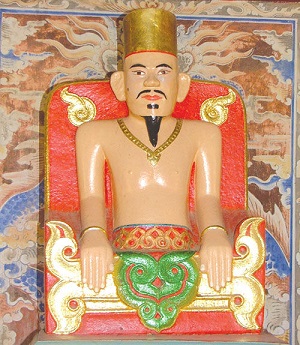
Figure 3. King Po Klong Mah Nai (Po Mah Taha, Maha Taha), who reigned from 1622 to 1627, was a Muslim king. The original statue before being dressed in the Cham royal costume. Photo: Putra Podam.
Rebuttal
Item 2: "Po Klong Mah Nai ascended the throne in the early seventeenth century and ruled until 1627, when he abdicated in favor of his son-in-law, Po Klong Khul." [Binh Thuan Radio and Television Station].
Binh Thuan Television (BTV) video: The Ritual Ceremony in Honor of Po Klong Mah Nai ???
Correction:
According to Dr. Putra Podam, this constitutes inaccurate information about Champa history disseminated by the Binh Thuan Department of Culture and Binh Thuan Provincial Radio and Television Station (BTV).
French researchers as well as the Panduranga chronicles (Sakkarai Dak Rai Patao) indicate that there is no king named Po Klong Khul in the historical records. Neither Đại Việt nor Champa sources document that Po Klong Mah Nai passed the throne to Po Klong Khul; he only abdicated in favor of Po Rome.
According to multiple sources and the Panduranga chronicles (Sakkarai Dak Rai Patao), Po Klong Mah Nai (1622-1627), a Muslim king, married his daughter Than Cih (also called Sucih, a follower of Islam) to Po Rome and passed the throne to him.
Po Rome (1627-1651) ascended the throne at Panduranga. His queen was Than Cih (Sucih), and he also had secondary consorts: Bia Than Can (a Rade woman, whose statue is inside Po Rome Tower) and a third consort, Bia Ut (from Sanskrit Uttara, meaning “North”). Bia Ut, known as the Northern Princess, was Ngọc Khoa, the third daughter of Lord Nguyễn Phúc Nguyên.
Po Rome officially held status as a member of the royal lineage adhering to Islam in the Malay region. Malay chronicles record that when Po Rome was in Makkah (Serembi Makkah, corresponding to the Kelantan Sultanate in Malaysia), he married an Islamic princess and was officially given the religious name Nik Mustafa, full name: Nik Mustafa Bin Wan Abul Muzaffar Waliyullah. The present-day Kelantan royal lineage traces back to Po Rome.
Po Rome had three other consorts: Bia Laku Makam, Bia Hatri, and Bia Sumut. Some sources on Po Rome legends mention the phrase: “Bia Sumut tok Cam di Kut”. Based on this saying, the Cham people consider Bia Sumut to be an Islamic princess by origin.
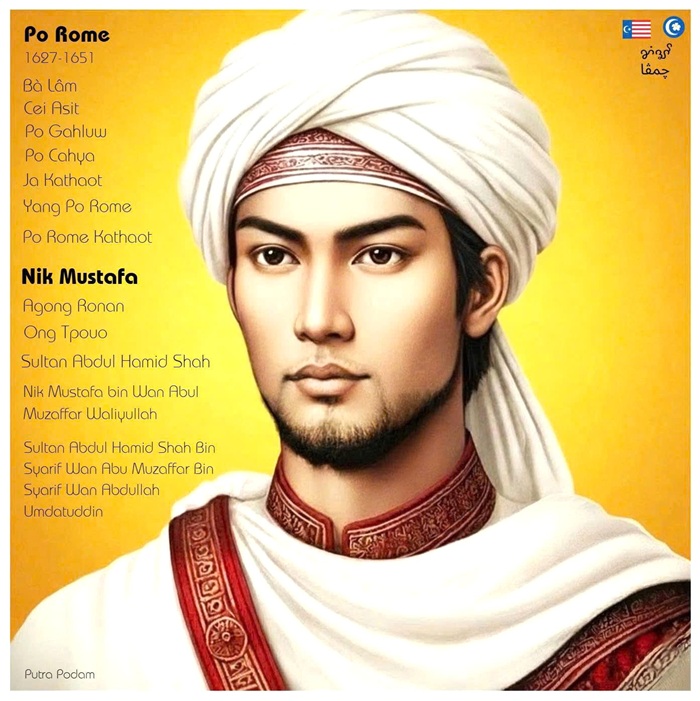
Figure 4. King Po Rome (Nik Mustafa, Sultan Abdul Hamid Shah, Nik Mustafa Bin Wan Abul Muzaffar Waliyullah). Po Rome (reigned 1627-1651) was a Panduranga-Champa king who followed Islam, succeeding the dynasty of Po Klong Mah Nai (Po Mah Taha), also a powerful Muslim Champa king. During his time in Makkah, known to the Malays as Serembi Makkah, corresponding to the Kelantan Sultanate (Malaysia), Po Rome married an Islamic princess, Puteri Siti (Princess Siti). He officially held status as a member of the royal lineage adhering to Islam in Malaysia. Malay chronicles record that the current ruling line of the Kelantan Sultanate traces its ancestry to King Po Rome. Photo: Putra Podam.
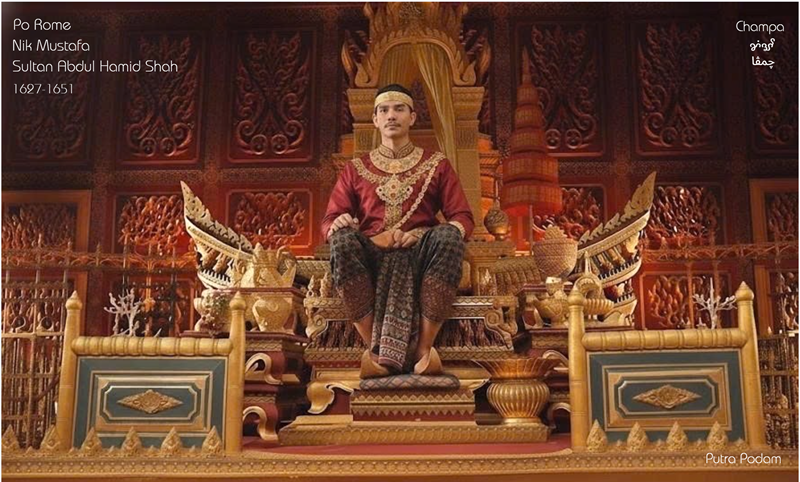
Figure 5. King Po Rome, regnal name: Nik Mustafa Bin Wan Abul Muzaffar Waliyullah. Member of the royal lineage following Islam in Serembi Makkah, part of the Kelantan Sultanate, Malaysia. Photo: Putra Podam.

Figure 6. Po Rome (1627-1651). Po Rome was revered and worshiped by the Cham people according to different faiths: Ahier followers (Hindu worshiping Allah) or Awal followers (Islam). When worshiped according to Yang, he is called Yang Po Rome (the deity Po Rome). When worshiped according to Cei, he is called Cei Asit. When worshiped according to Atuw (Islam), he is called Cahya. When worshiped according to Yang Baruw (of Islamic origin), he is called Po Gahluw. Photo: Putra Podam.
Rebuttal
Item 3: "…the northern temple is dedicated to the Cham queen Po Bia Som, and the southern temple is dedicated to a Vietnamese secondary consort." [As stated on the stele and by the Binh Thuan Radio and Television Station].
Binh Thuan Television (BTV) video: The Ritual Ceremony in Honor of Po Klong Mah Nai ???
Correction:
According to Dr. Putra Podam, this constitutes inaccurate information about Champa history disseminated by the Binh Thuan Department of Culture and Binh Thuan Radio and Television Station (BTV).
Po Klong Mah Nai (1622-1627) was a Muslim king who was deeply devoted to Islam. Like many other monarchs, he had multiple wives. Moreover, as a Muslim king, religious law permitted him to have several wives. Po Klong Mah Nai had one official Cham queen, Bia Som, along with several other secondary Cham consorts, with no mention of any Vietnamese princess.
The stone stele claims that the northern temple is dedicated to the Cham queen Bia Som and the southern temple to a Vietnamese secondary consort (Nguyễn Thị Ngọc Thương). It also mentions: “The southern temple is dedicated to the Vietnamese secondary consort along with her two children, Kut” ???
According to Dr. Putra Podam and the Panduranga chronicles (Sakkarai Dak Rai Patao), Po Klong Mah Nai, as a Muslim king, had an official Cham queen, Bia Som, and several secondary Cham consorts. No historical research on Champa, French archival sources, or chronicles record that Po Klong Mah Nai married a Vietnamese princess. The information about ‘Princess Nguyễn Thị Ngọc Thương’ likely originates from later misunderstandings and does not reflect historical reality.
This inaccuracy affects perceptions of Cham religion and culture. Po Klong Mah Nai was a Muslim, and asserting that he married a Đại Việt princess misrepresents the religious orientation of the dynasty and the political and social relations between Panduranga and neighboring kingdoms. Removing or correcting this information is necessary to preserve historical accuracy and maintain the scholarly, cultural, and educational value of these records.
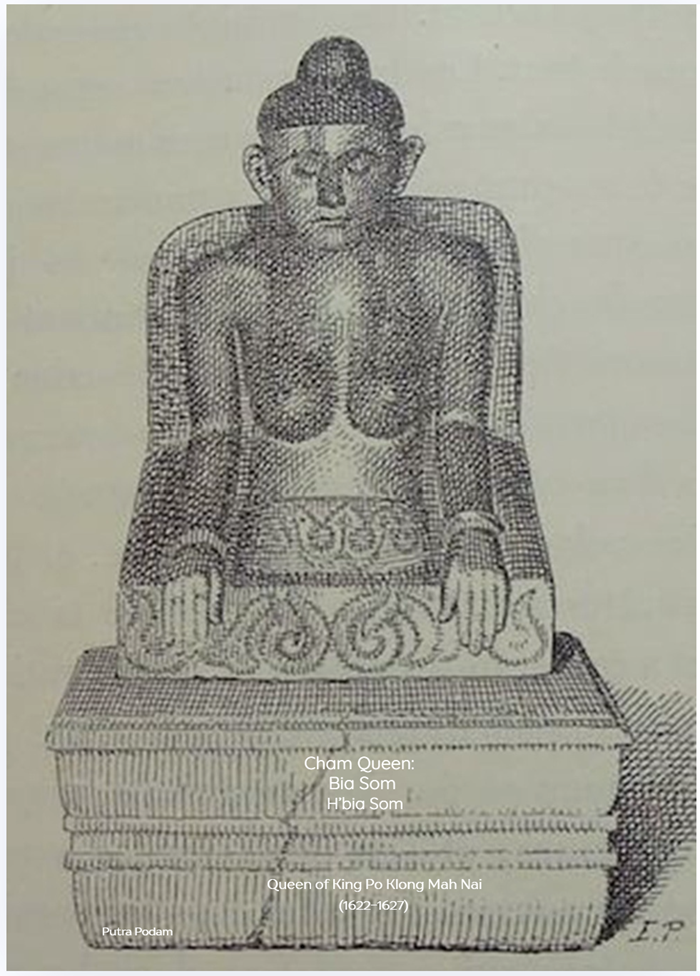
Figure 7. Queen Bia Som (Po Bia Som), the official queen of King Po Klong Mah Nai (Po Mah Taha), a Muslim (Islamic) ruler. The illustration was created by Henri Parmentier (1871-1949), a French scholar and architect, and Director of the Archaeological Service of the École française d’Extrême-Orient (EFEO) in Vietnam. He conducted extensive research, inventory, and documentation of Champa monuments. His drawings of Champa statues and monuments were published in the renowned work Inventaire descriptif des monuments Cams de l’Annam. Photo: Henri Parmentier. Edited by Putra Podam.

Figure 8. Queen Bia Som (Po Bia Som), the official queen of King Po Klong Mah Nai (Po Mah Taha), a Muslim (Islamic) ruler. The illustration was created by Henri Parmentier (1871-1949), a French scholar and architect, and Director of the Archaeological Service of the École française d’Extrême-Orient (EFEO) in Vietnam. He conducted extensive research, inventory, and documentation of Champa monuments. His drawings of Champa statues and monuments were published in the renowned work Inventaire descriptif des monuments Cams de l’Annam. Photo: Henri Parmentier. Edited by Putra Podam.
According to H. Parmentier (Monuments chams de l’Annam, EFEO Publications, Paris, vol. 1, 1909, p. 38), Po Klong Mah Nai is the name of King Po Mah Taha (1622-1627), who was the father-in-law of King Po Rome (1627-1651). The temple of Po Klong Mah Nai is a place of veneration for King Po Mah Taha and Queen Bia Som, along with other secondary consorts whose identities were unknown to the Cham at that time.
On the explanatory stele placed at the entrance gate, the Binh Thuan Department of Culture states: ‘The southern temple is dedicated to a Vietnamese secondary consort along with her two children, Kut.’ This information is not mentioned in many Cham sources or in French archival materials.
Question: On what basis or sources did the Binh Thuan Department of Culture create the story of the Vietnamese secondary consort (Nguyễn Thị Ngọc Thương)? It is requested that the Binh Thuan Department of Culture provide an explanation to clarify public understanding.

Figure 9. Queen Bia Som (Po Bia Som), the official queen of King Po Klong Mah Nai (Po Mah Taha), was a Muslim (Islamic) queen. The statue was photographed before being dressed in the Cham royal costume. This statue is placed in the northern chamber of the Po Klong Mah Nai Temple. Photo: Putra Podam.
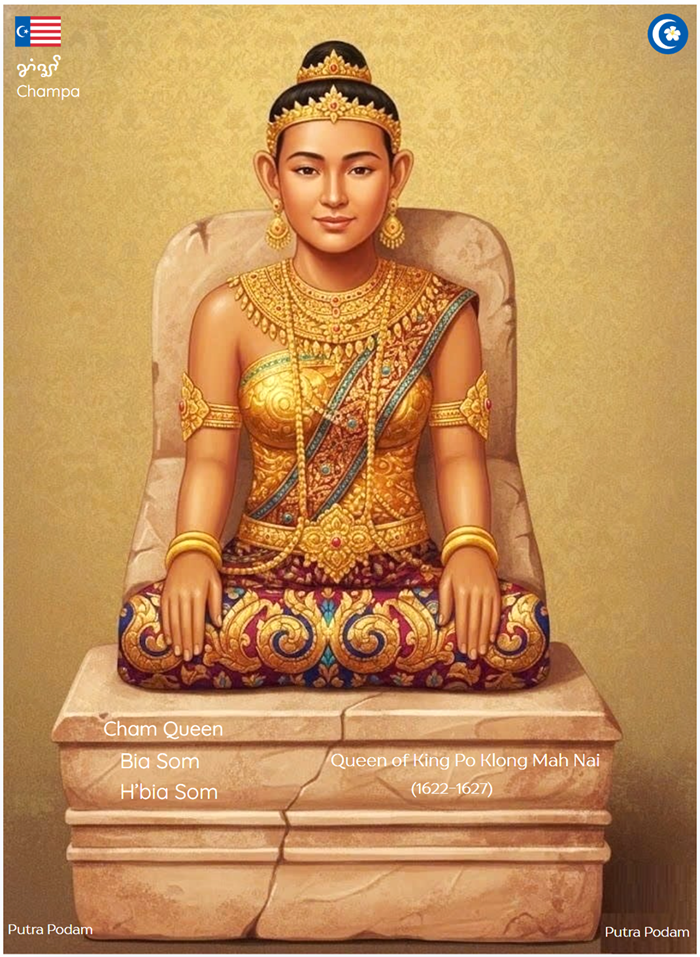
Figure 10. Queen Bia Som (Po Bia Som), the official queen of King Po Klong Mah Nai (Po Mah Taha), a Muslim (Islamic) queen. The original photograph was taken by Henri Parmentier (1871-1949), a French scholar and architect, and Director of the Archaeological Service of the École française d’Extrême-Orient (EFEO) in Vietnam. Based on Parmentier’s photograph, Putra Podam used AI technology to digitally reconstruct the image of the queen in the context of seventeenth-century Cham culture. Photo: Putra Podam.
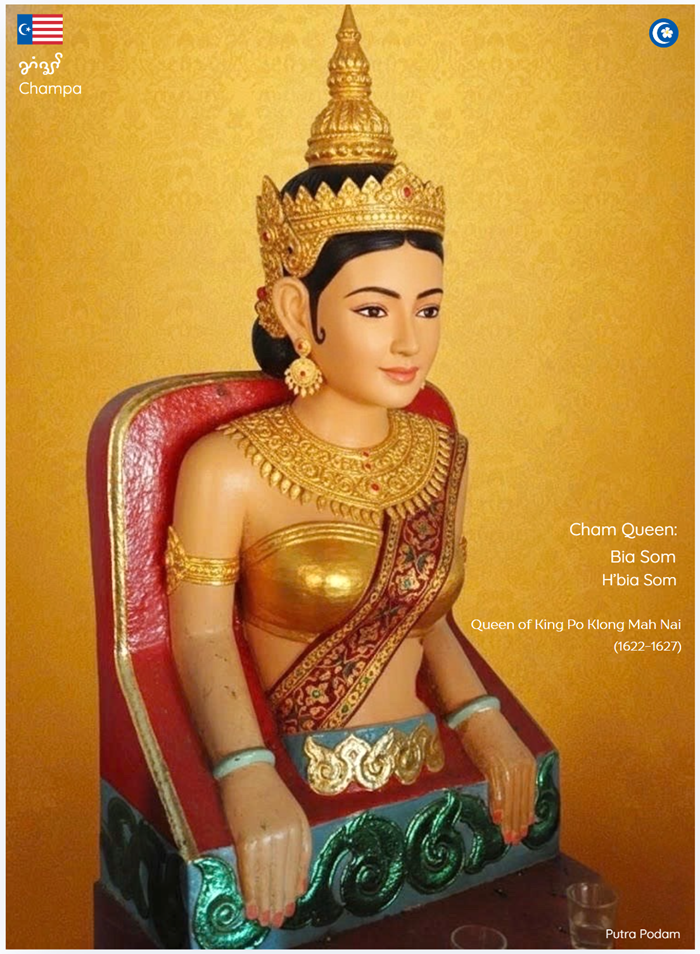
Figure 11. Queen Bia Som (Po Bia Som), the official queen of King Po Klong Mah Nai (Po Mah Taha), a Muslim (Islamic) queen. The original photograph was taken by Henri Parmentier (1871-1949), a French scholar and architect, and Director of the Archaeological Service of the École française d’Extrême-Orient (EFEO) in Vietnam. Based on Parmentier’s photograph, Putra Podam used AI technology to digitally reconstruct the image of the queen in the context of seventeenth-century Cham culture. Photo: Putra Podam.
The Po Klong Mah Nai Temple was burned at the end of the 19th century, after which the Cham people carried out renovations. In 1964, the temple was restored by the armed forces of the Republic of Vietnam.
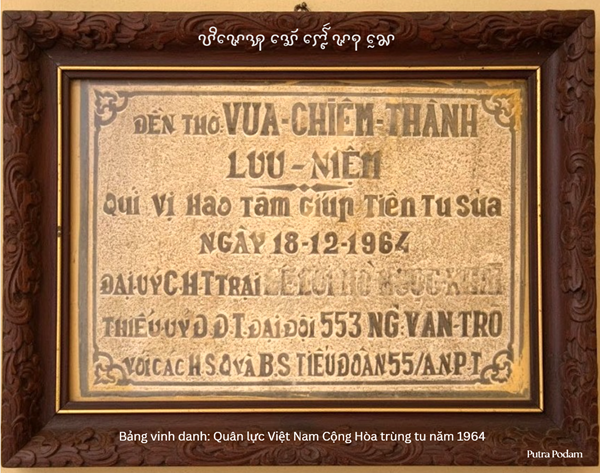
Figure 12. The commemorative restoration plaque engraved on the Po Klong Mah Nai Temple, dated 18 December 1964, by the armed forces of the Republic of Vietnam. Photo: Putra Podam.
In 1993, the Po Klong Mah Nai Temple was recognized as a National Historical and Artistic Monument of Vietnam under Decision No. 43/VH/QD dated 7 January 1993.
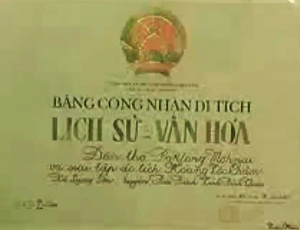
Figure 13. The Po Klong Mah Nai Temple was classified as a National Historical and Artistic Monument of Vietnam under Decision No. 43/VH/QĐ dated 7 January 1993 by the Ministry of Culture and Information. Photo: Putra Podam.
The architectural complex of the Po Klong Mah Nai Temple consists of five sanctuaries arranged along the traditional axis of Cham religious architecture in Panduranga. The three main sanctuaries are located at the rear: the central sanctuary is dedicated to King Po Klong Mah Nai (Po Mah Taha); the left sanctuary is dedicated to the Cham queen Po Bia Som, along with two Patuw Kut statues considered representations of two princes according to Cham folk tradition; the right sanctuary is dedicated to a Cham secondary consort, also accompanied by two Patuw Kut statues representing her two children according to Cham beliefs.
At the front are two antechambers, where the community performs preparatory rituals before entering the bimong (main sanctuary), including waiting, arranging offerings, adjusting ceremonial attire, and following the proper ritual procedures of the Cham people in Panduranga.
The system of statues at the Po Klong Mah Nai Temple is regarded as precious examples of late-classical Cham sculpture. Notably, the statue of King Po Klong Mah Nai, carved from a single block of green stone, demonstrates refined sculptural style, solid and solemn form. The statue depicts the king in a royal court posture, wearing a crown symbolizing the authority of seventeenth-century Panduranga rulers, providing important evidence of the continuation of Champa royal artistic traditions in the late period.
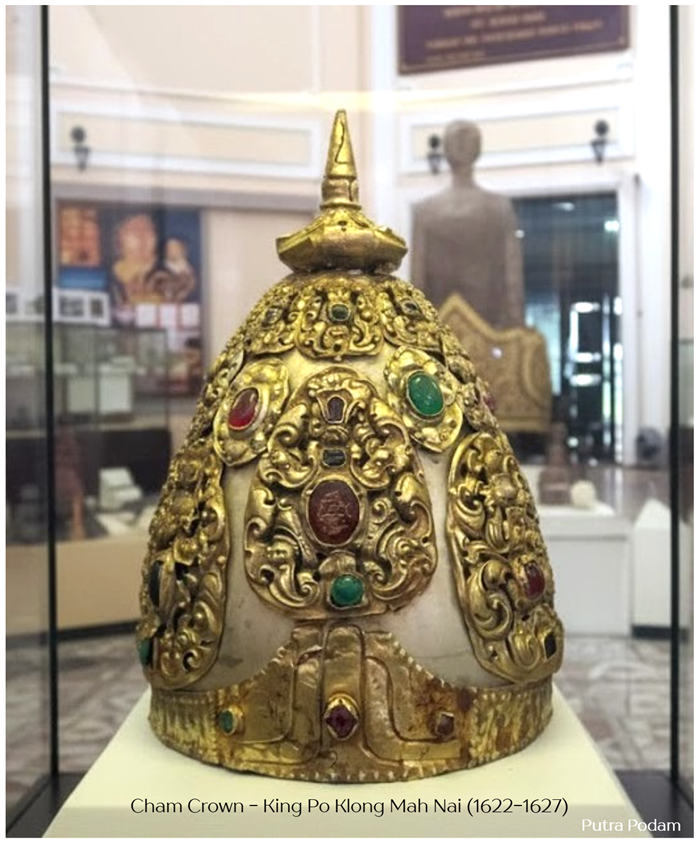
Figure 14. The attribution of this crown as the royal crown of King Po Klong Mah Nai (Maha Taha), a seventeenth-century Panduranga ruler, currently lacks solid scientific evidence. Comparisons with the royal attire traditions of contemporary Islamic dynasties in the region such as Islamic Champa (Panduranga), Malay, Aceh, and Java in the seventeenth century show clear differences. These dynasties typically used turbans (serban), fabric caps, or lightweight symbolic crowns, limiting large structural elements and dense carvings in accordance with Islamic principles of restrained expressions of authority. In contrast, this crown has a heavy structure, gilded metal covering, dense scrollwork, and numerous colored stones, aligning more closely with the late Khmer Angkor tradition. This difference supports the conclusion that the artifact does not belong to the Islamic royal attire system of King Po Klong Mah Nai in the early seventeenth century. Photo: Collected.
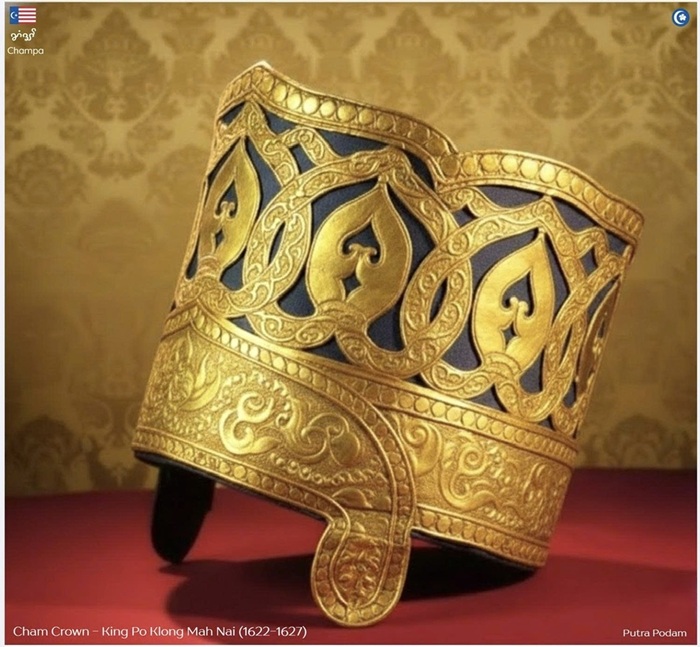
Figure 15. Although this crown is currently presented as the ‘crown of King Po Klong Mah Nai,’ based on its form, artistic style, religious context, and historical sources, there is no scientific basis to identify it as the royal crown of King Po Klong Mah Nai (Maha Taha), the seventeenth-century Panduranga ruler. The artifact should be understood as a ceremonial crown or a symbolic votive object created in a later period to serve the deification of the king’s image at the temple, rather than as an original historical object of the dynasty. This rebuttal recommends that the scientific council adjust the display label and artifact classification, while also expanding research to clarify the ritual history and the deification of Champa kings. Photo: Putra Podam.
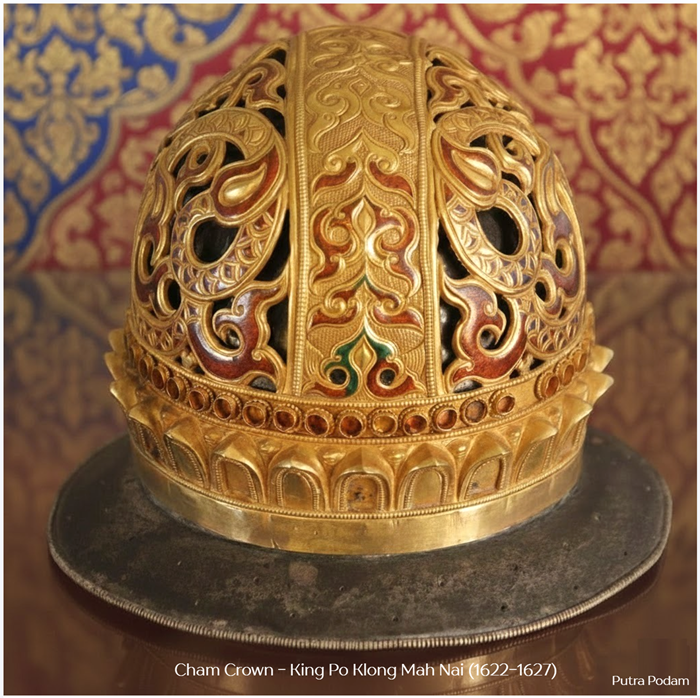
Figure 16. According to the Binh Thuan Department of Culture, this artifact is presented as a gold hair bun ornament of Queen Bia Som, featuring sophisticated craftsmanship and characteristic of late Cham ceremonial jewelry. It may have been a type of ornament reserved for women of the royal or high noble class, used in court and religious ceremonies. However, there is insufficient scientific evidence to confirm that this artifact belonged to Queen Bia Som, the official queen of King Po Klong Mah Nai. No historical texts or inscriptions directly link the artifact to this individual, and the artifact lacks a clear archaeological context to identify a specific owner. Furthermore, gold hair bun ornaments are not unique pieces but rather a common type of Cham royal jewelry, potentially used by multiple queens, consorts, or noblewomen. From the perspective of historical and archaeological research, attributing an artifact to a specific historical individual without verifiable evidence is inconsistent with scientific principles. In this case, the most accurate and cautious approach is to identify the artifact according to its type, period, and cultural context, rather than associating it with Queen Bia Som based on conjecture or oral tradition. Therefore, it can be concluded that the artifact is a Cham royal hair bun ornament of high historical and artistic value, but its association with Queen Bia Som cannot currently be verified and requires careful consideration. Photo: Putra Podam.
Related links
1. Petition Requesting the Correction of Historical Information at the Po Klong Mah Nai Heritage Site
2. Kiến nghị hiệu đính thông tin lịch sử tại di tích đền Po Klong Mah Nai
3. Po Klong Mah Nai truyền ngôi cho Po Rome (Nik Mustafa)
4. King Po Klong Mah Nai abdicated in favor of Po Rome (Nik Mustafa) (English)
5. Sở Văn hóa Bình Thuận đưa thông tin sai lệch về Po Klong Mah Nai
6. Bà Nguyễn Thị Thềm không phải hậu duệ của vua Po Klong Mah Nai
7. Putra Podam video: Vua Po Klaong Manai vị vua Islam (Hồi giáo)
8. Putra Podam video: Tháp Champa: Đền thờ Po Klaong Mah Nai
9. Video Đài Bình Thuận (BTV): Lễ phụng tế Po Klong Mah Nai ???
References
1. Aymonier, Étienne. Notes sur les Chams et leur religion. Paris: 1891.
2. Cabaton, Antoine. Essai sur la langue cam. Paris: 1901.
3. Maspero, G. Le Royaume de Champa. Paris: 1928.
4. Parmentier, Henri. Monuments chams de l’Annam, Tome I. Paris: Publications de l’École Française d’Extrême-Orient (EFEO), 1909.
5. Coedès, George. The Indianized States of Southeast Asia. Honolulu: University of Hawaii Press, 1968.
6. Moussay, Gabriel. Dictionnaire Cam-Français. Saigon: 1971.
7. Po Dharma. Le Panduranga (Campa) 1802-1835. Paris: École Française d’Extrême-Orient, 1987.
8. Po Dharma. L’histoire du Campa. Paris: 1989. Xem thêm Pierre-Bernard Lafont (ed.), Champa et le Monde Malais. Paris: 1995.
9. Mohd. Zamberi A. Malek. The Malay-Champa Historical Relations. Kuala Lumpur: 1995.
10. Sakkarai dak rai patao (Biên niên sử các vua Panduranga). Bản chép tay lưu hành trong cộng đồng Cham; đối chiếu theo Po Dharma, Chroniques des rois de Panduranga, EFEO Archives.
11. Quốc sử quán triều Nguyễn. Đại Nam Thực Lục. Bản dịch Viện Sử học, Hà Nội.
12. Bộ Văn hóa - Thông tin Việt Nam. Quyết định số 43/VH/QĐ ngày 7/1/1993 về công nhận di tích lịch sử và nghệ thuật quốc gia.