Among the 11 Central Committee members from ethnic minority groups, only one holds a position on the Politburo. This presence indicates that, in principle, access to the highest echelons of power is not entirely closed. Yet, the singular and non-recurring nature of this case demonstrates that it is an individual exception rather than a reflection of a stable, long-term representative mechanism.
Internal structural analysis shows that, of the 11 minority members, only three belong to indigenous ethnic groups: the Rhade (Ê Đê), Bahnar, and Khmer communities. These groups have long-standing historical settlement, closely tied to distinct cultural and social spaces in the Central Highlands and Southern Vietnam, and are widely recognized by historical, anthropological, and international legal studies as indigenous communities.
Conversely, the remaining eight minority members primarily originate from Northern Vietnam, particularly the midland and mountainous provinces. These regions were integrated early and deeply into the modern state apparatus and historically developed institutional mechanisms for training, selecting, and planning cadres. This distribution indicates that not all ethnic minority communities have equal opportunities to access central power, and current political representation reflects clear disparities in personnel development mechanisms.
At the local level, five Central Committee members from ethnic minorities currently serve as Provincial Party Secretaries in Quảng Ngãi, Tuyên Quang, Sơn La, Lâm Đồng, and Lạng Sơn. Domestic media often interpret these appointments as the outcome of rotation and management experience accumulation. However, from an institutional perspective, these positions are concentrated in areas already familiar with ethnic minority governance models and do not yet reflect a comprehensive national strategy for indigenous representation.
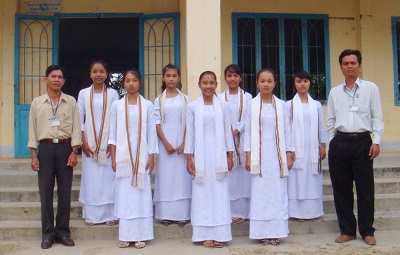
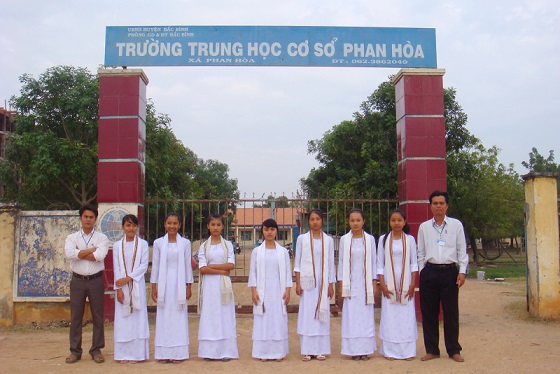
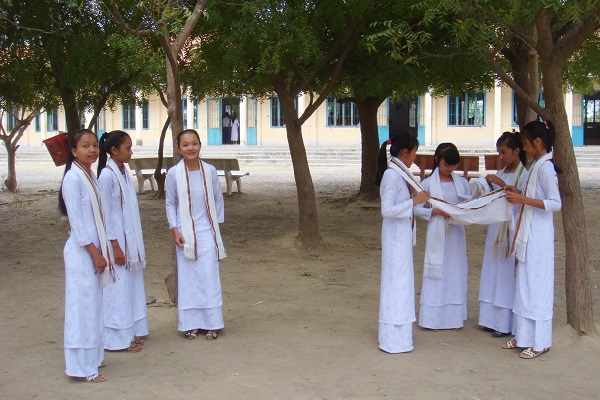
Placed in the post-1975 historical context, researchers have highlighted the long-term absence of certain indigenous communities in the Central Committee. The Cham community is a particularly notable example. In multiple Party Congresses, no continuous or stable representation of Cham members at the central level has been recorded, despite their historical status, distinct cultural and religious identity, and persistent presence within Vietnamese society.
This becomes especially significant when contrasted with the Cham community’s intellectual resources. Independent surveys show that there are currently more than 10 Cham individuals in Vietnam holding doctoral degrees, including some with associate professorships, alongside over 20 individuals with master’s degrees working in state agencies. Additionally, a number of Cham professors and PhDs are active in France, the United States, Malaysia, Thailand, and Cambodia. These data demonstrate that the Cham community possesses academic, professional, and governance capabilities.
However, in practice, educational attainment and intellectual capital do not automatically translate into political power. Research indicates that the lack of long-term policies for training, identifying, and planning cadres among indigenous communities, including the Cham, has created structural bottlenecks, resulting in interrupted and unsustainable political participation at the central level.
From the perspective of Southeast Asian historians and anthropologists, Champa was historically a major indigenous civilization with developed political and social structures, closely linked to maritime spaces and regional trade networks. From this viewpoint, the Cham today should not be reduced to a mere “ethnic minority” in the modern administrative sense, but rather recognized as a community directly inheriting a civilization with a deep historical legacy spanning thousands of years.
Regional comparisons indicate that political representation of the Cham is not inherently unattainable. In Cambodia, over multiple terms, the state has maintained Cham inclusion within government structures, with roughly five ministerial or deputy ministerial positions and approximately five parliamentary seats held by Cham representatives. In Malaysia, the Cham also participate in state and policy sub-structures to varying degrees. These cases illustrate that Cham political representation depends on policy choices and institutional design, rather than any intrinsic limitation of the community itself.
According to the United Nations framework on the rights of indigenous peoples, political representation is measured not merely by quantity but also by continuity, substantive participation, and influence in decision-making processes. Symbolic, intermittent, or geographically limited representation cannot be considered adequate under contemporary multi-ethnic governance standards.
In the context of Vietnam’s continued pursuit of inclusive development, narrowing regional disparities, and strengthening social cohesion, reviewing and improving policies on the training and planning of cadres for indigenous communities is a long-term strategic necessity. This issue concerns not only the Cham but serves as a benchmark for the state’s capacity to govern diversity and uphold historical and cultural identity in modern governance.
Political representation is not a figure to be displayed. It is a marker of recognition, a measure of genuine integration, and a foundation for the legitimacy of power in a multi-ethnic society.
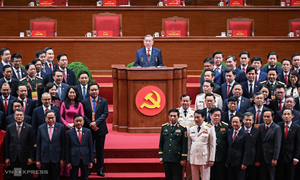
Figure 1. The 14th National Congress of the Party